Microclot Test UK: NHS, Private and Mail-In Options
Short answer
A microclot test in the UK isn't part of NHS Long COVID assessment: NICE guidance and the NHS page list other blood tests and checks, and don't list microclot testing. The routes are research studies, private labs and clinics, and mail-in kits. Microclot staining is a research method with no validated clinical cutoff, so ask any provider about method, sample and report before paying.
Key takeaways
- 1NICE guideline NG188 and the NHS Long COVID page list routine blood tests, heart rate, blood pressure and oxygen checks, and don't list microclot testing.
- 2UK access routes are research studies, private labs and clinics (often abroad), and mail-in kits; prices are often not published.
- 3A 2023 Cochrane review judged the laboratory evidence insufficient to link amyloid fibrin(ogen) particles to post-COVID condition.
- 4Before paying, ask which sample is used, how it is stained and imaged, who reads it and what the report says it cannot show.
- 5A microclot result is observational information to discuss with a clinician, not a diagnosis.
Microclot test UK options are limited: the NHS doesn't list microclot testing in its Long COVID assessment, so the routes are research studies, private labs and clinics, and mail-in kits. This guide shows what NHS and NICE sources do list, what each route gives you, and what to ask before you pay.
Does the NHS offer a microclot test?
We found no sign that it does. NICE guideline NG188 (last updated 25 January 2024) says blood tests should be guided by symptoms and may include a full blood count, kidney and liver function, C-reactive protein, ferritin, BNP, HbA1c and thyroid function. The NHS Long COVID page (last reviewed 19 August 2025, checked in November 2026) mentions blood pressure and heart rate tests, blood tests and oxygen level checks. Neither source lists microclot testing, and the word doesn't appear in NG188's investigations section or on the NHS page.
That fits the evidence status. The 2023 Cochrane review (Fox et al.) appraised five laboratory studies, which found amyloid fibrin(ogen) particles in people with post-COVID condition, healthy people and people with diabetes. It judged the results insufficient to link the particles to post-COVID condition. Our evidence review of whether microclots are real sets out both sides.
NICE also tells clinicians to rule out urgent causes first, and the NHS asks you to see a GP if you think you have Long COVID. Our Long COVID blood test guide covers what routine bloods can and can't show.
Which routes can you actually use in the UK?
| Route | What you get | Typical cost if published | Wait | Sample type | Limits |
|---|---|---|---|---|---|
| GP and post-COVID assessment | Routine bloods and checks to rule out other causes; possible service referral | Not applicable: microclot testing isn't listed | Varies by area | Venous blood | No microclot result |
| Research study | Data used for research; an individual result isn't guaranteed | Often no charge to participants | Months, if recruiting | Usually venous blood | Eligibility rules; no diagnosis |
| Private UK lab or clinic | We found no UK provider we could verify; method would vary by provider | Often not published | Ask | Often venous blood | Quality and reporting vary |
| Private lab abroad | Lab report, often with consultation | Often not published; ask what shipping and fees are included | Ask | Often venous blood or plasma | Cost, transport and sample handling |
| Mail-in kit (ours) | Videographic Microscopy Report in a secure portal | $160 USD kit price; shipping quoted at checkout | Report within 3 days of the lab receiving the sample | Dried finger-prick blood | Not validated against the venous plasma method |
For wider comparisons, see our microclot testing access and cost index and the directory of microclot testing labs and treatment centers. We didn't verify a named UK provider for this guide, so we don't list one.
What does the research method actually need?
The published studies mostly stain platelet-poor plasma from citrated venous blood with Thioflavin T and image it. A 2024 Blood Advances study of 104 critically ill ICU patients did this and found microclots in 44 (42.3%) on ICU admission and in none of 20 healthy controls. That was an ICU cohort, not Long COVID.
There's no approved clinical test, no standard protocol and no agreed reference range. Our guide to how to test for microclots compares the methods, and D-dimer versus microclot testing explains why a normal D-dimer doesn't settle the question.
Next step
Want microscopy data to take to your GP?
Our at-home amyloid fibrin test is a mail-in kit with an observational report. It isn't a diagnosis.
What should you ask a provider before paying?
Method, sample, validation and report decide whether a result is usable. Ask these:
- Which sample is used (venous plasma, whole blood or dried blood), and how long between collection and processing?
- How is it stained and imaged (Thioflavin T fluorescence microscopy, flow cytometry or something else)?
- Who reads the images, and is counting done by a person, software or both?
- Has the method been validated, and against what? Is there a reference range, and where did it come from?
- Does the report include images or video, particle counts and sizes, and a statement of limits?
- What does the price cover: consultation, shipping, repeat testing?
- What can't this result tell me?
Be wary of anyone who promises a diagnosis, or who bundles a result with a treatment plan. No treatment has been shown to remove these particles or change outcomes, as our microclots treatment overview explains.
How does a mail-in microclot test work from the UK?
With our kit, you collect a finger-prick dried blood sample at home and post it to our partner laboratory in Mexico City. Shipping the kit to you is quoted at checkout, and you pay the postage to return your sample. We can't promise delivery times, because they depend on couriers and postal services. Check the postal service's rules before you post a blood sample abroad.
The lab stains the sample with Thioflavin T and records microscopy video. The report counts the glowing shapes and measures their size, and you can share it from a secure portal. Once the lab has your sample, the report is ready within 3 days. Our comparison of at-home testing versus a clinic covers the trade-offs in more depth.
Questions to ask your doctor
A result, from any route, is something to discuss, not act on alone.
- Could my symptoms have a treatable cause that routine tests should check first?
- Which of my symptoms would make you refer me to a post-COVID assessment service?
- If I bring a private or mail-in report, how would you use it?
- Which symptoms mean I should seek urgent care instead of waiting for results?
Taking a blood thinner, antiplatelet or supplement because of a microclot result is a decision for your clinician, since these can cause bleeding and interact with other medicines. Sudden chest pain, severe breathlessness, a swollen painful leg, one-sided weakness or confusion could mean a large clot, heart attack or stroke: call emergency services, whatever any test says.
For the wider picture of symptoms and research, read our guide to amyloid microclots and Long COVID.
Where our kit fits
Our at-home amyloid test is a microclot test kit that uses Thioflavin T staining, the same principle as the published research. The kit costs $160 USD. It isn't a diagnosis or a medical device, and it hasn't been validated against the venous platelet-poor-plasma method used in published studies. We also can't promise a result will change your care.
To see how the method compares with other tests, read our amyloid fibrin test guide.
Frequently asked questions
Can I get a microclot test on the NHS?
We found no sign that it is part of routine NHS Long COVID assessment. NICE guideline NG188 and the NHS Long COVID page list blood tests such as a full blood count, plus blood pressure, heart rate and oxygen checks, and they don't list microclot testing. Access to research studies depends on whether one is recruiting near you.
Is there a private microclot test in the UK?
We found no UK private lab offering microclot testing that we could verify for this guide, and some people use providers abroad instead. Prices are often not published, so ask for an itemised quote. Check method, sample type and report contents yourself before paying.
Can I do a microclot test at home in the UK?
Yes, mail-in kits exist. Ours uses a finger-prick dried blood sample posted to a partner laboratory in Mexico City, and the customer pays return postage. Shipping to you is quoted at checkout. It isn't a diagnosis and hasn't been validated against the venous plasma method used in published research.
Will a GP refer me for a microclot test?
A GP can order routine tests and refer you to a post-COVID assessment service where one is available, but microclot testing isn't listed in NICE guidance. If you bring a private or mail-in result, a GP can decide what, if anything, it changes. It's reasonable to ask that they read it as research-grade information.
Does a normal D-dimer mean I don't have microclots?
No. D-dimer measures fragments from ordinary clot breakdown, while microclot tests look for Thioflavin T-positive particles in plasma or blood. They answer different questions, and a normal D-dimer neither confirms nor rules out microclots. A D-dimer can still matter if a large clot is suspected, so don't skip medical care.
Is a microclot test worth paying for?
That's your call. The particles are an established research observation, but there's no validated reference range, and no proven treatment follows from a result. Some people want objective data to bring to a clinician. If that's you, choose a provider that is clear about method and limits and that lets you share the full report.
Sources
- COVID-19 rapid guideline: managing the long-term effects of COVID-19 (NG188), section 3 Investigations and referral. NICE, 2024
- Long-term effects of COVID-19 (long COVID). NHS, 2025
- Plasmapheresis to remove amyloid fibrin(ogen) particles for treating the post-COVID-19 condition. Cochrane Database of Systematic Reviews, 2023
- Microclots, as defined by amyloid-fibrinogen aggregates, predict risks of disseminated intravascular coagulation and mortality. Blood Advances, 2024
At-Home Amyloid Test
Want microscopy data to take to your GP?
Our at-home amyloid fibrin test is a mail-in kit with an observational report. It isn't a diagnosis.
Next steps
- Amyloid Fibrin Test: How Fibrin Amyloid Microclots Are DetectedWhat an amyloid fibrin test is, how Thioflavin T microscopy spots fibrin amyloid microclots, how it differs from D-dimer, and what it can't tell you.
- Amyloid Fibril Test: Methods Used to Detect Amyloid FibrilsHow an amyloid fibril test works: Thioflavin T, Congo red, electron microscopy, X-ray diffraction and seeding assays compared, with which are clinical.
- Types of Amyloid Tests: Blood Tests, PET, CSF, Biopsy and MicroclotsCompare the types of amyloid tests: Alzheimer's blood tests, amyloid PET, spinal fluid, amyloidosis biopsy and fibrin amyloid microclot microscopy.

Tim Ottowitz
Founder & Research Lead
Tim Ottowitz founded Amyloid Test and writes its Science Hub, turning fibrin amyloid and spike protein research into plain-language guides that stay close to the published evidence.
Keep reading

Cytokine Panel vs Microclot Test in Long COVID: What Each Shows
Compare Long COVID cytokine panels with Thioflavin T microclot microscopy: what soluble immune markers miss, trapped clot proteins, and testing costs.
D-Dimer vs Microclot Test: Why a Normal D-Dimer Can Miss Microclots
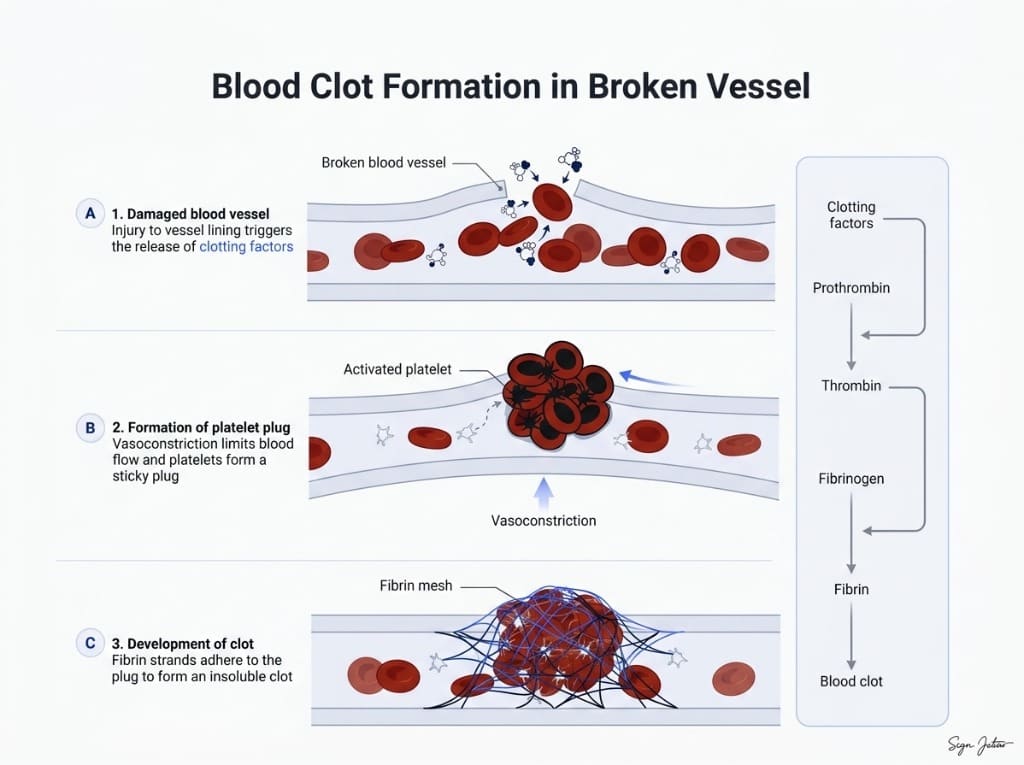
D-dimer vs microclot test compared: what each measures, why D-dimer can read normal in Long COVID, and how Thioflavin T microscopy finds fibrin amyloid.
Microclot Testing Access and Cost Index 2026
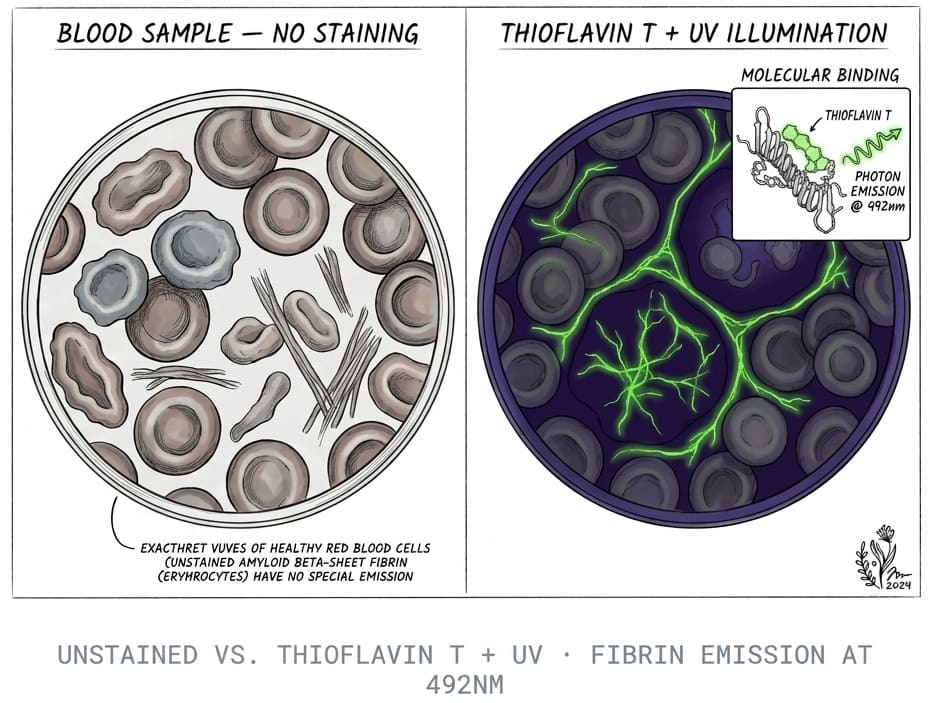
Microclot testing cost compared: at-home kits, private clinics, research studies and hospital testing, with sample, turnaround and what each shows.