Laboratory Screening
The At-Home Amyloid Test
Laboratory screening for amyloid fibrin, also called microclots, in dried blood. For people investigating persistent post-viral symptoms.
Why This Matters
EMERGING RESEARCH
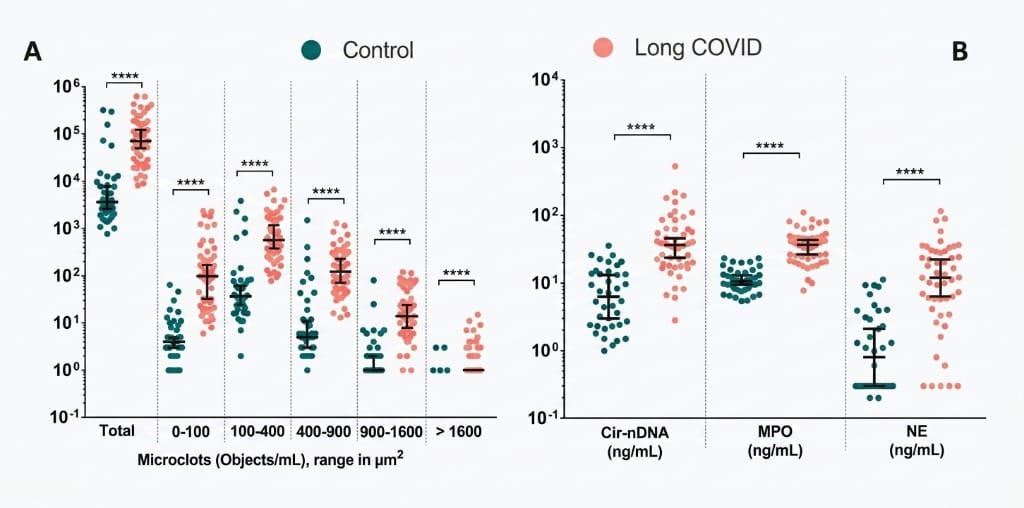
When fibrin misfolds into rigid amyloid structures, it forms microclots that resist breakdown and obstruct blood flow. Research in Biochemical Journal and Journal of Medical Virology has documented these in post-viral patients.
Thioflavin T Fluorescence Microscopy
Relevance
Who this microclot test isfor
Most of the global population has been exposed to SARS-CoV-2 or received COVID-19 vaccines. We are only now discovering that amyloid fibrin microclots, a silent vascular pathology invisible to standard blood tests, may be widespread. If health is your first principle, you must check.
This is for you if
You understand this is a new and largely unknown pathology affecting the global population. You want to detect amyloid fibrin microclots now and treat immediately.
- You're investigating persistent post-viral symptoms: fatigue, brain fog, shortness of breath, circulation issues.
- You were exposed to SARS-CoV-2 or received a COVID-19 vaccine. This silent vascular damage may exist without symptoms. Check now, treat immediately.
- Standard blood work came back "normal" but you still feel unwell, seeking data your clinician can review.
- You understand the difference between laboratory screening and medical diagnosis.
This is not for you if
You're seeking Alzheimer's or Parkinson's testing. Those are different tests that measure brain amyloid plaques, not blood fibrin microclots.
- You're looking for Alzheimer's or Parkinson's testing. This measures blood fibrin microclots, not brain amyloid plaques.
- You need a medical diagnosis for dementia or neurological disease.
- You have urgent symptoms: chest pain, stroke signs, acute shortness of breath. This is screening, not emergency care.
- You expect insurance coverage. This is self-pay only ($160 USD / 3,200 MXN).
The Silent Variable
The most dangerous thing amyloid doesis nothing you can feel
Amyloid fibrin microclots accumulate silently. They don't announce themselves. The question isn't how you feel today — it's what's building up regardless.
You feel good. That's real.
We're not questioning it. The problem is that "feeling good" and "being amyloid-free" are completely unrelated. Amyloid microclots don't cause symptoms until they've accumulated enough to measurably obstruct capillary blood flow. By the time you feel something, the cascade is already years deep.
This is not a theory.
This is the fundamental challenge of every protein-misfolding disease ever studied — prion disease, Alzheimer's, Parkinson's, systemic amyloidosis. The pathology builds silently. The symptoms arrive late. The window for early intervention closes before most people know it was ever open.
Your car has a check engine light. It comes on before the engine fails. You don't wait for smoke from the hood before checking the oil.
Your body has no check engine light for amyloid accumulation. No built-in sensor that says "amyloid fibrils are forming in your plasma." No symptom that reliably correlates with early-stage microclot formation.
This test is the check engine light that biology didn't give you.
Every person who is now symptomatic felt good once.
Every person with Long COVID who can't get out of bed, whose brain fog makes reading impossible — every single one had a period where they felt fine. Where the microclots were accumulating but hadn't crossed the symptomatic threshold.
The only question is whether you want to be one of the people saying "I wish I had tested earlier."
The Data Is Observable
Pretorius, Kell, Turner, and others documented microclot pathology in post-viral patients that predated their most severe symptoms — sometimes by years.
The amyloid was there long before they felt it.
The Privileged Position
Detection = Prevention
The fact that you feel good right now is exactly why you should test. You're in the window where detection equals prevention. Once symptoms arrive, you're in damage control.
Testing while you feel good is not hypochondria. It's using the advantage you currently have: time.
The First 100 Cohort
Pioneer, Not Patient
We're establishing baseline data on amyloid fibrin prevalence in people who feel normal. The open question — the one that matters for everyone — is how widespread this is in the asymptomatic population.
- Full Videographic Microscopy Report
- Contribute to a dataset that doesn't exist
You feel good. That's the best reason to find out what's actually in your blood.
Order Your At-Home Collection Kit
Commission a microscopy study of your dried blood sample. Everything you need to collect and return your sample is delivered directly to your door.
No subscription • Cancel anytime before shipment for a full refund
Operational Pipeline
How the at-home amyloid test works:expert lab analysis
Request a Kit
Select your country and complete checkout. Kits typically ship within one week of order processing.
Clinical Context
Why this line of investigationmatters
In a healthy system, fibrin helps your body create a temporary repair mesh when injury occurs. Once the danger passes, that mesh is usually broken down and cleared away.
Some Long COVID research has reported abnormal fibrin structures with amyloid-like properties in certain patients. These structures may be unusually sticky, unusually persistent, and harder for the body's normal cleanup systems to dissolve.
That does not settle the entire question, and it does not explain every case. But it is a serious enough signal that some people want a way to look for it directly, especially when standard coagulation panels have not answered what they are living through.
The Mechanism
Fibrin: The Body's Biological Glue
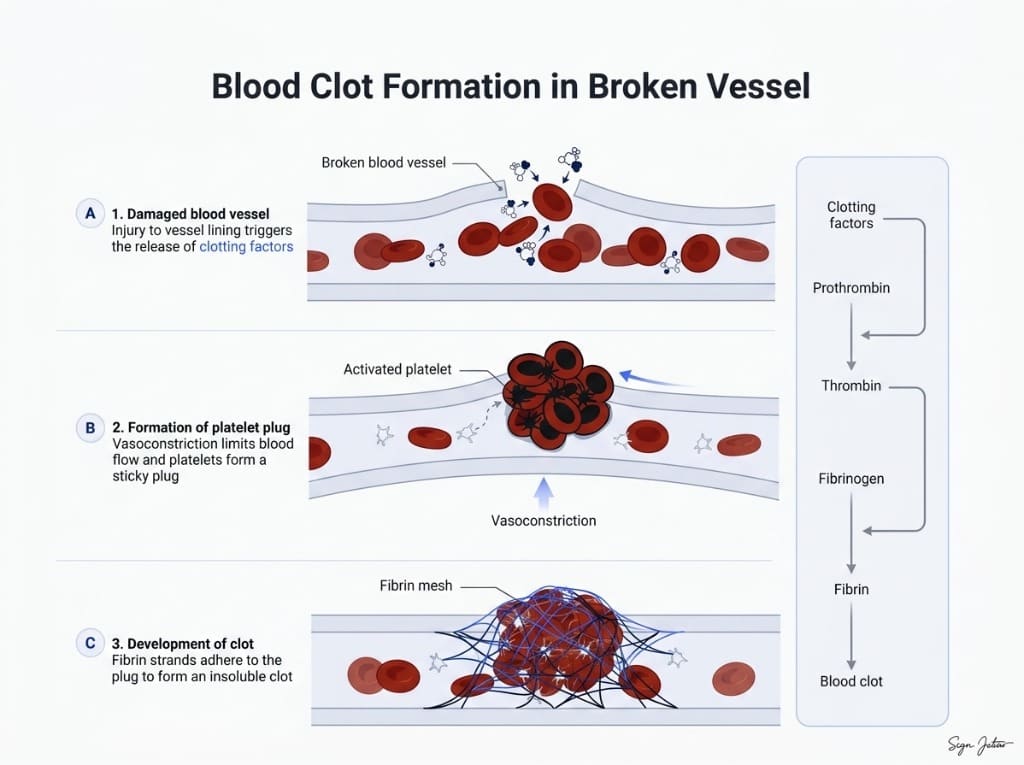
To fully grasp the scope of our diagnostic service, you must understand fibrin. When a blood vessel is damaged, your body initiates a rapid biological cascade. Soluble fibrinogen proteins are rapidly converted into long, sticky threads of insoluble fibrin.
These interwoven fibrin strands act as a structural mesh (shown in Stage C), catching red blood cells to form a standard clot. Once the injury successfully heals, your healthy body naturally deploys enzymes to dissolve this temporary mesh—a process called fibrinolysis.
The Pathology of Amyloid Microclots
Under chronic vascular stress or extreme inflammatory events, this natural fibrin cascade malfunctions. The fibrin proteins aggressively misfold into an "AMYLOID" state—an ultra-dense beta-sheet structure.
This transforms the temporary mesh into a permanent, highly rigid microclot that entirely resists your body's natural breakdown process.
Because these misfolded microclots are completely invisible to standard hospital coagulation markers...
...we had to pioneer a uniquely targeted screening protocol.
Diagnostic Comparison
Not All Amyloid Tests Are the Same
Our Laboratory Service
$160 — ACCESSIBLE SCREENING
Methodology
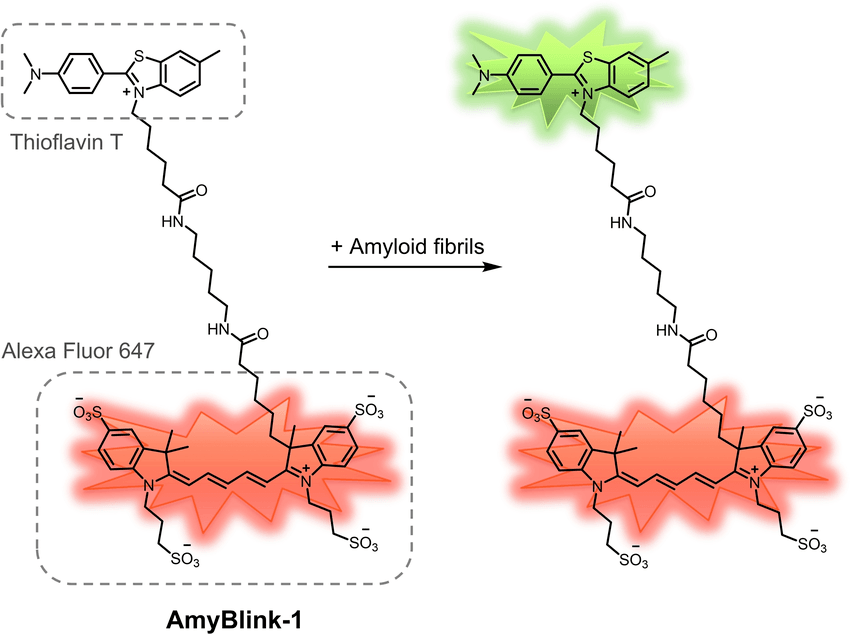
Thioflavin T (ThT) fluorescence microscopy. ThT binds specifically to beta-sheet-rich structures, causing amyloid-like fibrin deposits to emit green fluorescence under UV light.
Clinical Focus
Circulating structural protein aggregates forming microclots. Aligned with emerging research into post-viral coagulation patterns.
Sample Type
Traditional Diagnostics
$750–$5,000+ — SPECIALIZED
Primary Methodology
Liquid chromatography-tandem mass spectrometry or PET Imaging with radioactive tracers.
Diagnostic Pathway
Measures soluble Beta-amyloid peptides or brain plaques. Specifically designed for Alzheimer's neurological assessment.
Sample Type
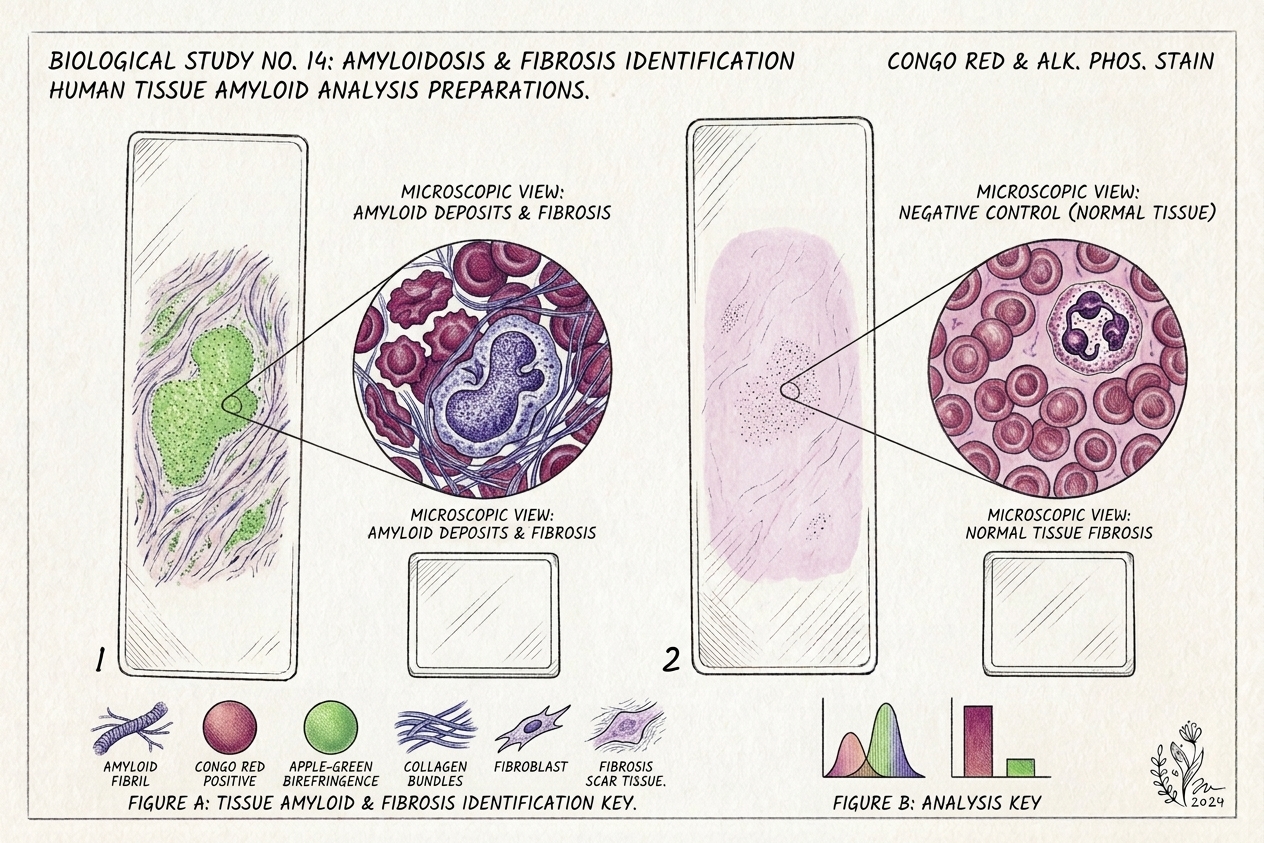
Biological Study No. 14 — Amyloid Deposits & Fibrosis vs. Normal Tissue Control · Congo Red & Alk. Phos. Stain
The Bottom Line
These are fundamentally different assays answering different clinical questions:
Screens for structural fibrin aggregation in blood
—post-viral coagulation patterns and microclot signals.
Measures soluble peptides or brain plaques
—specifically Alzheimer's neurological biomarkers.
Both are valuable at different stages. Many clients use our screening as a rational first step — checking for blood coagulation patterns before committing to expensive, invasive neurological diagnostics.
Treatment Pathways
After a positive result,what now?
A positive screening result confirms microclots are present. This is not a diagnosis, but it is actionable data. Several therapeutic approaches may reduce microclot burden.
Double Filtration Plasmapheresis (DFPP)
A blood purification therapy using Japanese Asahi filters to physically remove amyloid microclots, spike protein, and circulating inflammatory complexes from plasma. The McCairn Protocol's core intervention.
Physically removes what enzymes cannot dissolve
Stem Cell Growth Factor (SGF)
Intravenous infusions of stem cell growth factors following DFPP to promote endothelial repair, restore vascular function, and support tissue regeneration after microclot clearance.
Part 2 of the McCairn Protocol
The McCairn Protocol
Developed by Dr. Kevin McCairn. DFPP + SGF combination therapy designed specifically for post-viral and post-vaccination microclot pathology. Now available in North America.
Key Research Citations
- • Kell DB, Laubscher GJ, Pretorius E. A central role for amyloid fibrin microclots in long COVID/PASC. Biochemical Journal. 2022;479:537-559.
- • Thierry AR, et al. Circulating Microclots Are Structurally Associated With Neutrophil Extracellular Traps. Journal of Medical Virology. 2025;97:e70613.
- • Kell DB, et al. Automated microscopic measurement of fibrinaloid microclots and their degradation by nattokinase. bioRxiv. 2024.
Analytical Framework
Fluorescence MicroscopyPowered by AI Intelligence
Sample Preparation
Your dried blood sample is prepared with Thioflavin T staining, a fluorescent dye that binds specifically to amyloid fibrils.
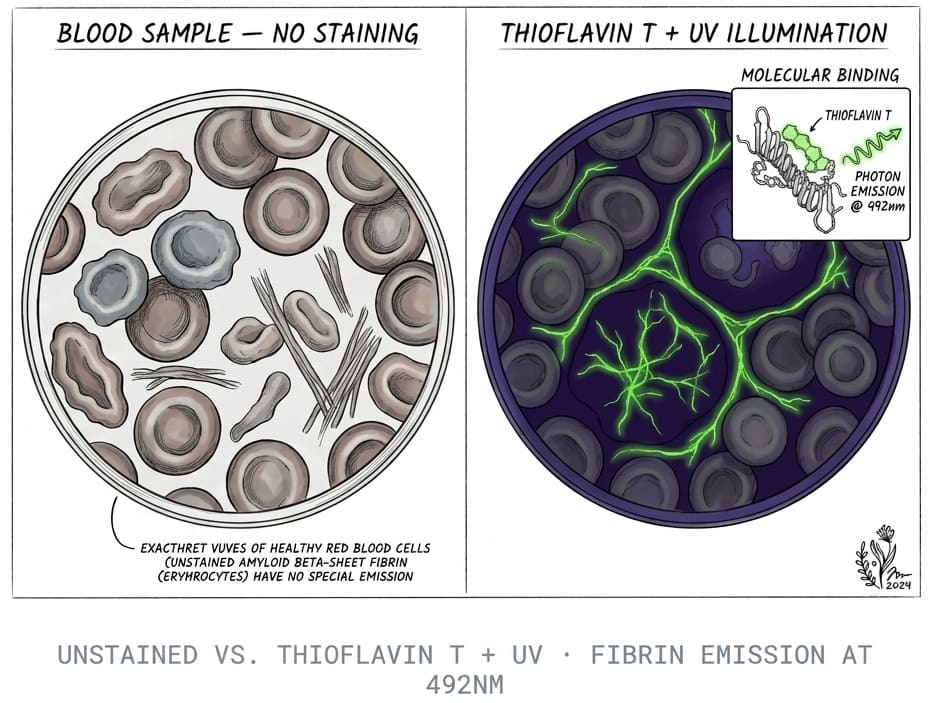
Unstained vs. Thioflavin T + UV · Fibrin Emission at 492nm
Scientific Foundation
Our methodology aligns with published research on high-sensitivity fluorescence spectroscopy for amyloid detection.MacKeigan et al. (2023) demonstrated that Thioflavin concentration-controlled measurements enable sensitive detection of β-amyloid aggregates — including subtle protein misfolding that precedes clinical symptoms.
Verification
Two Reviewers. One Result.Zero Compromise.
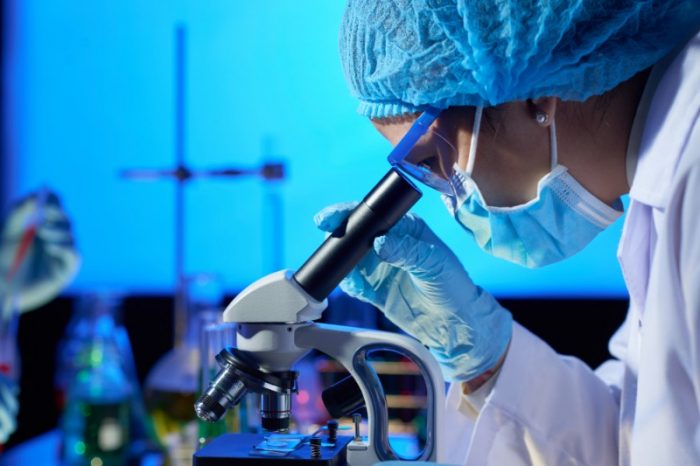
Like code review in software development, your results pass through two independent reviewers: AI-powered analysis and expert human verification. Together, they catch what either might miss.
Path 1: AI-Powered Analysis
PRECISION AT SCALE
Our proprietary Gemini vision model, trained on amyloid research datasets, analyzes 6K microscopy footage in real-time. It detects fibril patterns with pixel-level precision, processing thousands of data points that human eyes might miss.
- Real-time 6K video analysis
- Trained on amyloid research datasets
- Pixel-level fibril detection
Path 2: Expert Scientist Review
HUMAN VERIFICATION
Trained scientists review AI findings with decades of amyloid identification experience. They catch edge cases, verify patterns, and provide contextual nuance that AI alone cannot offer.
- Decades of amyloid identification experience
- Edge case detection and verification
- Contextual pattern interpretation
The Result: Consensus Verification
When AI and scientist agree, you get high-confidence results. When they disagree, we investigate further. No assumptions. Just verification.
Based on Max Planck Institute study analyzing 40,000+ diagnoses across 2,100 clinical vignettes
Laboratory Standards & Validation
Reference Methodology & Quality Controls
How our partner laboratory prevents false positives, controls for background artifact autofluorescence, and ensures reproducible findings across postal transit.
Pretorius & Kell Chemistry
Standardized Thioflavin T (ThT) fluorescence protocols binding specifically to anomalous beta-sheet fibrin amyloid cavities, exciting at ~440nm and emitting at ~492nm.
Batch Controls & Blank Slides
Every analysis batch runs alongside verified negative healthy controls and reagent-only blank slides to rigorously rule out dye precipitation and non-specific autofluorescence.
Dried-Smear Transit Stability
Unlike fragile liquid tubes susceptible to post-draw lysis or warm-temperature micro-thrombosis, dried smears on medical-grade glass slides fix and stabilize aggregates through international mail.
Next Steps
What happensafter the kit
The treatment page is the next step after results, where clients can review provider options and treatment planning.
1. Receive your report
Your microscopy findings create the baseline and show whether there is enough signal to discuss follow-up care.
2. Review treatment options
The treatment page explains what comes after screening, including provider discovery and the post-kit pathway.
3. Plan next steps
If treatment is appropriate, clients can use the dedicated page to move from report review into provider coordination.
Open the treatment page to see providers and the after-kit path.
Open Treatment PageInvestment
Amyloid Test Kit Pricing
Made affordable through AI-powered automation
or
What's Included:
No hidden fees. Cancel anytime before shipment for full refund. Results in 1 day from lab receipt.
Common Questions
Amyloid Test FAQ
Ready to Screen
If this fits your case,take the next step clearly.
You should be able to decide with a clear head: what this service can show, what it cannot prove, and whether it is worth adding to your workup.
🇩🇪🤝🇲🇽 German-Mexican Collaboration
Why I keptbuilding this
I started this company after watching someone close to me struggle with post-vaccine health complications and seeing how hard it was to get affordable amyloid-related testing. Hospital options were often expensive, narrow, or aimed at a different clinical question.
The deeper issue was not only price. It was fit. Traditional hospital amyloid testing is usually designed for Alzheimer's-related peptide measurement or brain-plaque assessment. That is important work, but it does not directly answer the question many post-viral patients are asking about circulating fibrin structures in blood.
Using my background in data engineering and AI, I partnered with a physician in Mexico City to build a service around Thioflavin T fluorescence microscopy for dried-blood analysis. The goal was not to overclaim. It was to make one serious line of investigation more accessible, more transparent, and easier to discuss with a clinician.
The result is a lower-cost first-line screening option that asks a different question before many people commit to a far more expensive diagnostic path.