Does Long COVID Show Up on Blood Tests? What Normal Results Miss
Short answer
Usually not. No routine blood test can diagnose or rule out long COVID, and a large NIH study found 25 standard lab tests didn't tell patients apart from controls. One reason is what those tests measure. The changes researchers describe, such as fibrin folded into amyloid microclots that resist breakdown, spike protein fragments forming amyloid fibrils, and immune debris trapped in clots, aren't part of any standard panel.
Key takeaways
- 1The CDC says no laboratory test can definitively diagnose or rule out long COVID, and the NIH RECOVER study found 25 routine tests weren't clinically useful.
- 2Amyloid is a stacked cross-beta structure that is extremely stable, and fibrin can fold into it, forming microclots that resist the body's clot-dissolving enzyme.
- 3Because those microclots resist breakdown, they release little D-dimer, so a normal D-dimer doesn't rule them out.
- 4In lab studies, neutrophil elastase cuts spike protein into fragments that form amyloid fibrils, and Spike685 fibrils make fibrin clots resist plasmin.
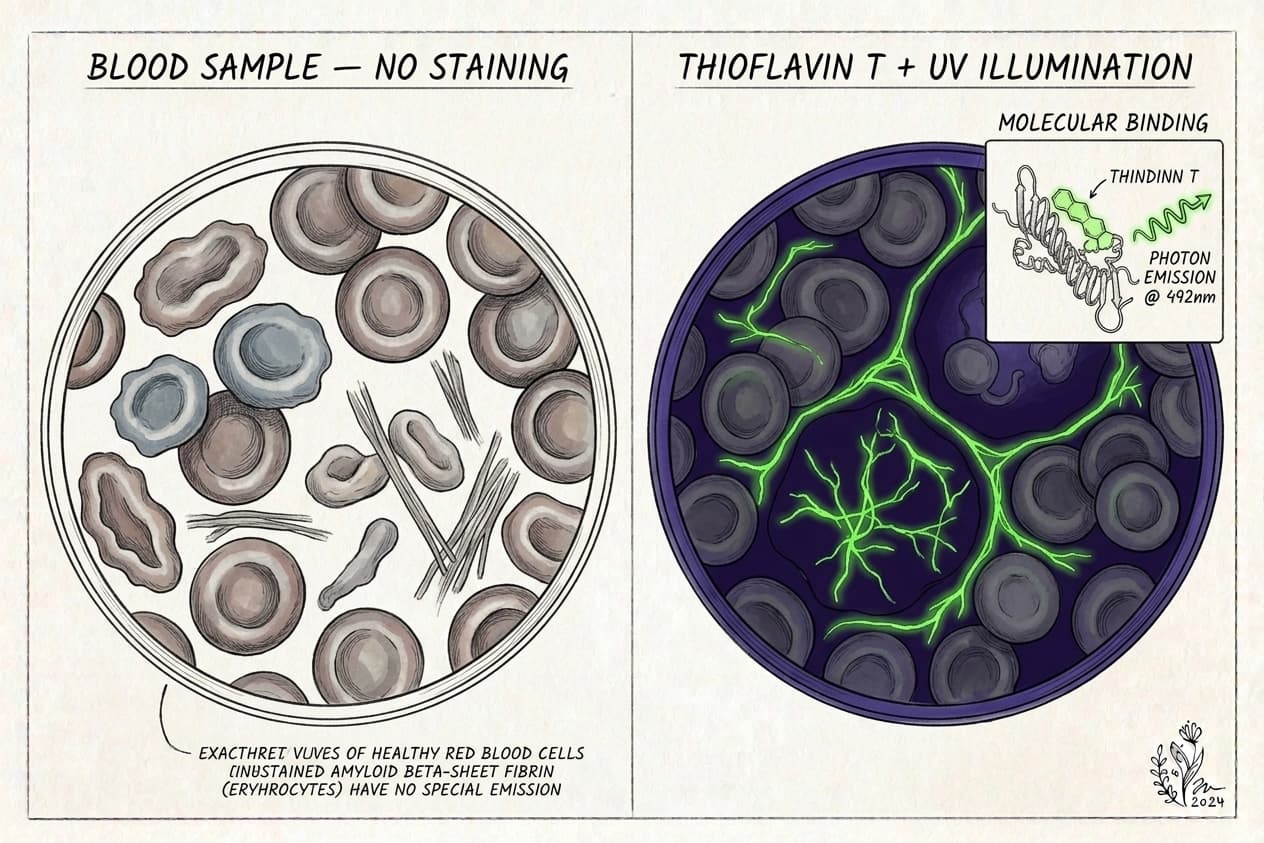
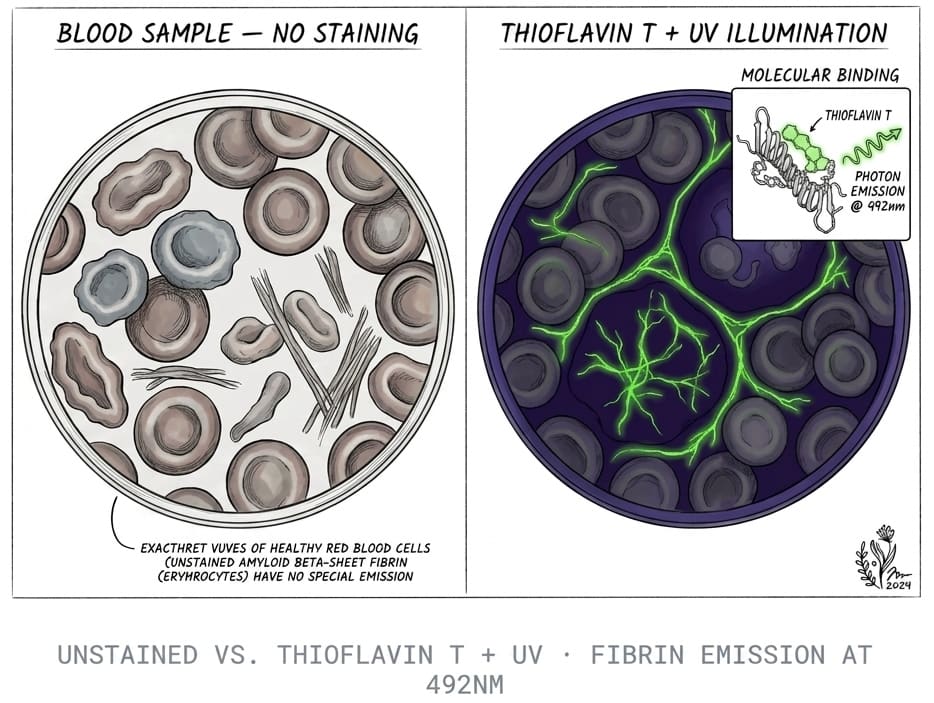
- 5Detecting amyloid needs dyes such as Thioflavin T and microscopy, which routine labs don't run.
"All my bloodwork came back normal" is one of the most common things people with long COVID say. This guide explains why, using the research we've covered across our Science Hub: what amyloid is, how fibrin and spike protein can form it, why that hides from standard tests, and what testing can still add.
Does long COVID show up on blood tests?
On routine tests, usually not. The CDC's clinical guidance states that no laboratory test can definitively diagnose or rule out long COVID. The NIH-funded RECOVER study then compared 25 routine blood and urine tests in nearly 10,000 adults and found no clinically useful differences between people with and without long COVID.
That's not because nothing is happening. It's because routine panels measure the wrong things. To see why, start with amyloid.
What is amyloid, and why is it so hard to clear?
Amyloid isn't one protein. It's a shape: protein strands stacked into long fibrils held together by a "cross-beta" backbone. Structural studies showed these spines lock together like a steric zipper, which makes amyloid extremely stable and hard for the body to break down. Our article on amyloid as an immune defense covers why the body sometimes builds amyloid on purpose, and why it can overshoot.
Many unrelated proteins can fold into this shape. Two of them matter for long COVID: fibrin, the clotting protein, and fragments of the SARS-CoV-2 spike protein.
How fibrin becomes amyloid microclots
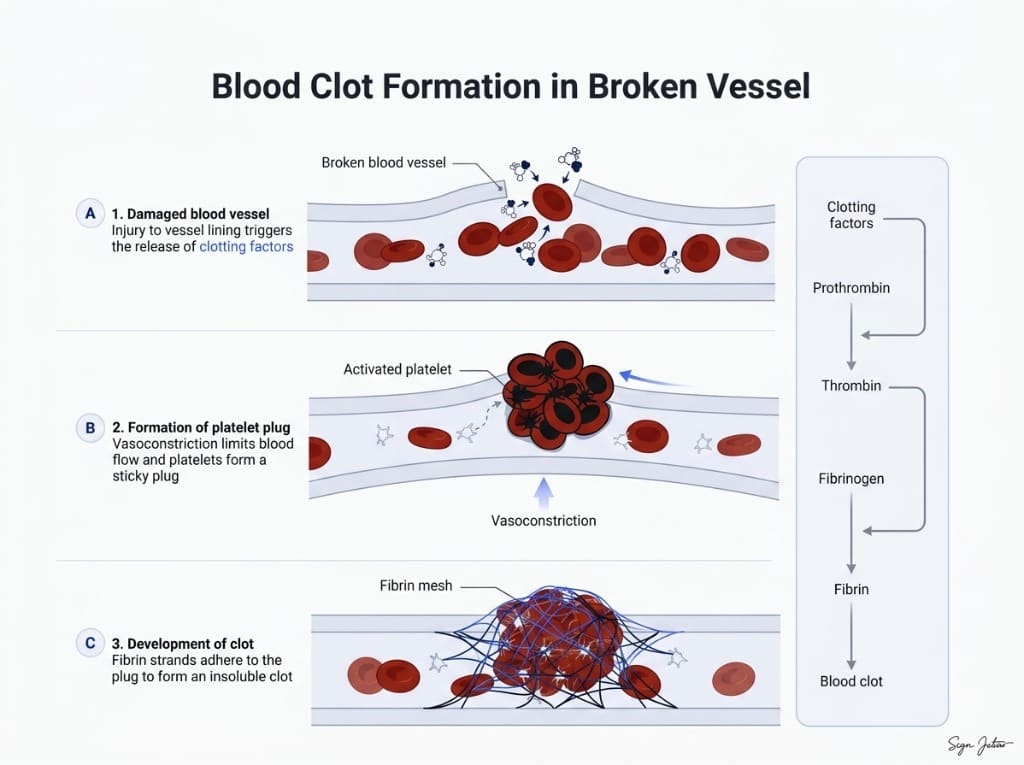
Normally, thrombin turns fibrinogen into a loose fibrin mesh, and plasmin dissolves it after the job's done. Pretorius, Kell and colleagues found that in long COVID, fibrin can instead fold into dense, amyloid-like deposits. In their 2021 study, long COVID plasma contained large amyloid deposits that stayed resistant to digestion and trapped raised levels of α2-antiplasmin, a natural brake on clot breakdown.
This explains one of the most confusing results patients get. D-dimer is released when plasmin breaks fibrin down. Clots that resist plasmin release little D-dimer, so a normal D-dimer can sit alongside microclots under the microscope. Our comparison of D-dimer vs microclot testing goes through this step by step, and amyloid microclots research summarizes the studies.
How spike protein forms amyloid fibrils
Our research coverage traces a second path, starting with spike protein itself.
- Spike has amyloid-prone segments. A Linköping team scanned the spike sequence and found seven stretches likely to form amyloid. Three met every amyloid criterion in the lab (Nyström and Hammarström, 2022).
- Inflammation cuts spike into those pieces. Intact, folded spike didn't form fibrils. But neutrophil elastase, an enzyme white blood cells release in large amounts during infection, cut spike into fragments that did. We explain this in neutrophil elastase and spike protein.
- Some spike fibrils make clots resist breakdown. In a 2025 Biochemistry study, fibrils made from the Spike685 segment made fibrin clots denser and much harder for plasmin to dissolve. Spike601 fibrils bound up fibrinogen instead, and five other spike fibrils had little effect. Details are in spike protein amyloid fibrils.
All three steps were shown in purified proteins, not in patients. But they describe a plausible chain that ends in the same place as the clinical microclot studies: clot material that resists clean-up.
Immune debris inside the clots
There's a third piece. Neutrophils can release neutrophil extracellular traps (NETs): webs of DNA studded with enzymes like elastase. A 2025 study of 50 long COVID patients found more circulating microclots and higher NET markers than in healthy controls, and NET material sitting inside Thioflavin T-stained microclots. We cover it in microclots and NETs in long COVID, and the enzymes that normally clear NETs in DNase and NET clearance.
What routine tests measure vs what the research describes
| Routine test | What it measures | What it misses |
|---|---|---|
| D-dimer | Fragments released as fibrin is broken down | Clots that resist breakdown release little D-dimer |
| PT/INR, aPTT | How fast plasma clots | The shape of clot material, amyloid or not |
| Fibrinogen | How much clotting protein is present | Whether fibrin has folded into amyloid |
| CRP, ESR | General inflammation | NETs and elastase activity inside clots |
| Full blood count | Cell numbers | Immune cell subsets and platelet activation |
| Spike antibody test | Immune memory of spike | Spike protein itself (antigen) |
The last row trips people up most. Commercial "spike level" tests measure antibodies. Detecting spike protein itself takes mass spectrometry. One such study found a vaccine-specific spike fragment in half of tested samples, up to 187 days after vaccination. Our guide to spike antibody vs antigen testing explains the difference.
Other research markers also differ in groups of patients, including immune cell shifts, Epstein-Barr virus reactivation and low cortisol. None is a validated test for an individual.
Next step
Normal bloodwork, but still unwell?
Our at-home amyloid fibrin test images what a routine panel doesn't look at: Thioflavin T-stained fibrin amyloid microclots, recorded on video you can share with your doctor.
See the at-home testHow amyloid is actually detected
Because amyloid is a shape, labs look for the shape. Thioflavin T is a dye that glows when it binds the cross-beta grooves, and fluorescence microscopy makes amyloid deposits light up against a dark background. Our pillar on the amyloid fibril test compares Thioflavin T, Congo red, electron microscopy and seeding assays. The amyloid fibrin test explains how the same staining is applied to blood.
None of these methods is part of a routine panel, and none has a validated diagnostic cutoff for long COVID yet. Haematologists have also challenged the microclot hypothesis, so treat any result as observational data. If you want to see your own sample, our at-home amyloid test uses Thioflavin T fluorescence microscopy on a finger-prick sample and returns a Videographic Microscopy Report. It isn't a diagnosis.
"My doctor says it's anxiety because my tests are normal"
This is one of the most common experiences shared in long COVID communities. A normal panel only means the problems that panel looks for aren't there. Racing heart on standing, adrenaline-like surges, air hunger and crashes after exertion fit recognized physiological patterns such as POTS and post-exertional malaise, which routine bloodwork doesn't measure. Normal troponin in the ER rules out a heart attack, but it doesn't rule out other causes of chest pain, so persistent chest symptoms deserve a proper cardiac workup. Ask for referrals based on your symptoms, not your lab sheet.
Which routine tests are still worth doing?
Normal results still matter, because they rule other things out. Depending on your symptoms, a doctor may check a full blood count, ferritin, thyroid function, a metabolic panel, B12 and folate, and CRP. Anemia, iron deficiency and thyroid disease are common, treatable causes of fatigue that should never be missed. The CDC also notes that a positive COVID test isn't required for a long COVID diagnosis.
How to use this with your doctor
- Bring a symptom timeline. Diagnosis is clinical, so your history is the strongest evidence.
- Ask what each test is meant to rule out. A normal result then means something.
- Ask about microclots and spike carefully. Explain that D-dimer and antibody tests measure different things, and use our explainers if helpful.
- Track symptoms over time. Our Long COVID survival guide has a simple approach.
Where to go next
To see how the testing options compare, read how to test for microclots. For the clotting story in plain language, start with what microclots are.
Frequently asked questions
Why are my blood tests normal if I feel so sick with long COVID?
Routine panels look for anemia, infection, organ damage and blood sugar problems. The changes researchers link to long COVID are different: fibrin that has folded into amyloid microclots, spike protein fragments that can form amyloid fibrils, and immune debris such as neutrophil extracellular traps caught inside clots. None of these is measured by a standard panel, so normal results are expected, not a sign that nothing is wrong.
Is there a blood test that can diagnose long COVID?
Not yet. The CDC says no laboratory test can definitively diagnose or rule out long COVID. Research methods, including Thioflavin T microclot imaging, immune profiling and spike antigen assays, show differences between groups of patients and controls, but none has a validated cutoff for diagnosing an individual. Be wary of anyone selling a single test as a long COVID diagnosis.
Why doesn't D-dimer show microclots?
D-dimer is a fragment released when the enzyme plasmin breaks fibrin down. Fibrin amyloid microclots are described in the research as resistant to plasmin, so they release little D-dimer. That's why a normal D-dimer can sit alongside microclots on Thioflavin T microscopy. D-dimer is still useful for ruling out deep vein thrombosis and pulmonary embolism.
Can a spike protein blood test show long COVID?
Most commercial spike tests measure antibodies, which reflect past infection or vaccination rather than how much spike is in your body now. Direct spike antigen detection needs mass spectrometry or specialized research assays. Studies have found spike or spike fragments in some people months later, but no spike test is a validated long COVID diagnosis.
Why is my CRP normal when my whole body feels inflamed?
CRP is made by the liver in response to strong, body-wide inflammatory signals such as a bacterial infection. Inflammation that sits in small blood vessels, nerves or inside clots may not raise it. In the microclot research, inflammatory molecules were found trapped inside the clots themselves rather than circulating freely, which is one reason CRP and ESR often stay normal.
Do I need a positive COVID test to be diagnosed with long COVID?
No. The CDC's clinical guidance says a positive viral or antibody test isn't required to diagnose long COVID. Many people were never tested during their infection. A positive test can support the history, but its absence doesn't exclude the diagnosis.
Sources
- Long COVID Clinical Guidance. U.S. Centers for Disease Control and Prevention, 2026
- Differentiation of Prior SARS-CoV-2 Infection and Postacute Sequelae by Standard Clinical Laboratory Measurements in the RECOVER Cohort. Annals of Internal Medicine, 2024
- Atomic structures of amyloid cross-β spines reveal varied steric zippers. Nature, 2007
- Persistent clotting protein pathology in Long COVID/Post-Acute Sequelae of COVID-19 (PASC) is accompanied by increased levels of antiplasmin. Cardiovascular Diabetology, 2021
- Amyloidogenesis of SARS-CoV-2 Spike Protein. Journal of the American Chemical Society, 2022
- SARS-CoV-2 Spike Protein Amyloid Fibrils Impair Fibrin Formation and Fibrinolysis. Biochemistry, 2025
- Circulating Microclots Are Structurally Associated With Neutrophil Extracellular Traps and Their Amounts Are Elevated in Long COVID Patients. Journal of Medical Virology, 2025
- Detection of recombinant Spike protein in the blood of individuals vaccinated against SARS-CoV-2. Proteomics Clinical Applications, 2023
- Distinguishing features of long COVID identified through immune profiling. Nature, 2023
- Challenging the current hypothesis that thrombosis is responsible for the post-COVID-19 condition. Research and Practice in Thrombosis and Haemostasis, 2024
At-Home Amyloid Test
Normal bloodwork, but still unwell?
Our at-home amyloid fibrin test images what a routine panel doesn't look at: Thioflavin T-stained fibrin amyloid microclots, recorded on video you can share with your doctor.
Next steps
- Microclots and Long COVID: A Plain-Language Guide to Amyloid ClotsMicroclots and Long COVID explained simply: what amyloid fibrin microclots are, how spike protein may be involved, what's proven and what's still open.
- Living With Long COVID: A Practical Survival Guide for Right NowA practical guide to living with Long COVID: what's known, what isn't, how to pace and track symptoms, red flags, and how to get more from appointments.
- Amyloid Fibrin Test: How Fibrin Amyloid Microclots Are DetectedWhat an amyloid fibrin test is, how Thioflavin T microscopy spots fibrin amyloid microclots, how it differs from D-dimer, and what it can't tell you.

Tim Ottowitz
Founder & Research Lead
Tim Ottowitz founded Amyloid Test and writes its Science Hub, turning fibrin amyloid and spike protein research into plain-language guides that stay close to the published evidence.
Keep reading
D-Dimer vs Microclot Test: Why a Normal D-Dimer Can Miss Microclots
D-dimer vs microclot test compared: what each measures, why D-dimer can read normal in Long COVID, and how Thioflavin T microscopy finds fibrin amyloid.
Amyloid Microclots: What the Research Shows So Far
What studies show about amyloid microclots in Long COVID: how fibrin forms them, why they resist breakdown, the key findings and the open questions.
How to Test for Microclots: Methods, Options and What Results Mean
How to test for microclots: the methods researchers use, why D-dimer can't detect them, where to get a microclot test and how to read the result.