Microclots vs Blood Clots: Four Things People Mean by 'Micro Clots'
Short answer
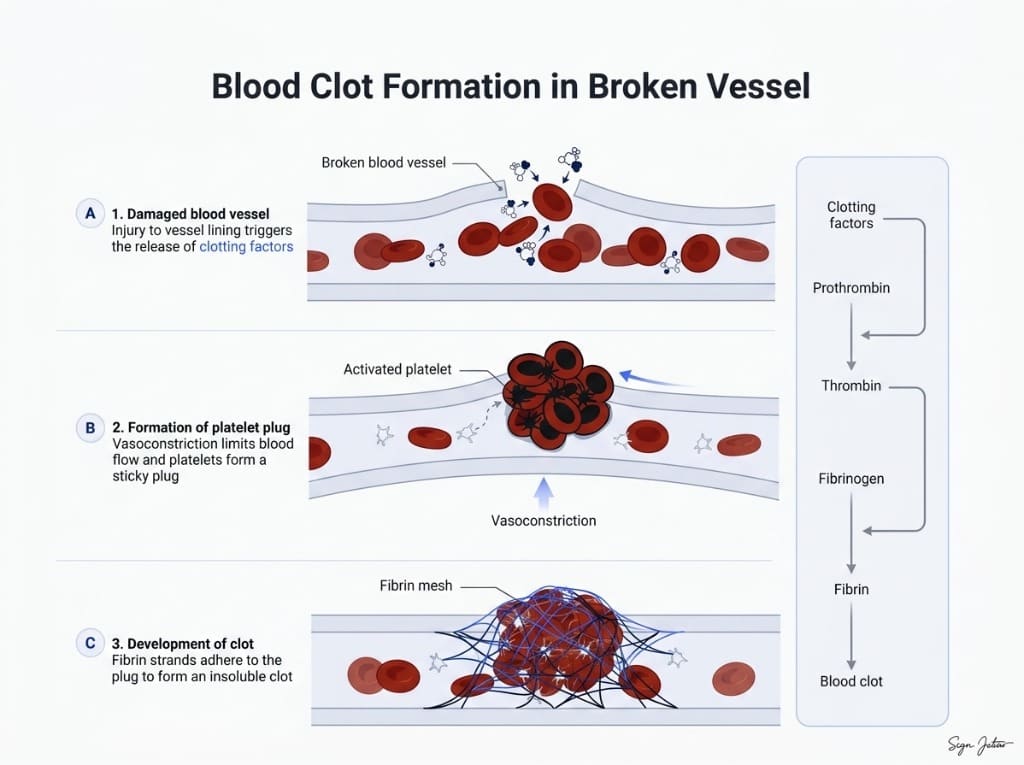
An ordinary blood clot is a mass of fibrin, platelets and red blood cells large enough to block a vein or artery. "Microclots" can mean small-vessel microthrombi seen on biopsy or autopsy, or the fibrin amyloid particles (about 1 to 200 micrometres) described in Long COVID research, which critics say aren't clots at all. They aren't the same thing, and "micro clotting disorder" isn't a diagnosis.
Key takeaways
- 1Four different things get called micro clots: ordinary clots, tissue microthrombi, fibrin amyloid particles in plasma, and large white 'calamari' casts.
- 2Microthrombi are small-vessel clots with a recognised medical meaning, seen in conditions like DIC, TTP and severe COVID-19 lungs.
- 3Fibrin amyloid microclots are Thioflavin T-positive particles from research labs. A 2023 Cochrane review and later critics say they aren't clots.
- 4D-dimer, platelets and fibrinogen behave differently across these four, so a normal D-dimer says little about fibrin amyloid particles.
- 5Sudden chest pain, breathlessness, a swollen painful leg or stroke signs are emergencies, whatever any microclot result says.
A blood clot in the usual medical sense is a mass of fibrin, platelets and red blood cells big enough to block a vein or artery. "Microclots" is used for at least three smaller or stranger things, and they don't share evidence, tests or treatment. This page defines each one, compares them in a table, and explains why a routine blood test can look normal for some and abnormal for others.
What do people mean by "micro clots"?
There are four meanings in circulation. Sources often blend them, so separate them before reading any claim.
- An ordinary thrombus. A deep vein thrombosis (DVT) is a blood clot in a vein, usually in the leg, according to the NHS. If part of it travels to the lungs it becomes a pulmonary embolism, which can be life-threatening.
- Microthrombi in tissue. These are small fibrin and platelet clots inside capillaries and arterioles, confirmed on biopsy or autopsy. In disseminated intravascular coagulation (DIC), MedlinePlus says small blood clots form in the blood vessels and can cut off supply to organs such as the liver, brain or kidneys.
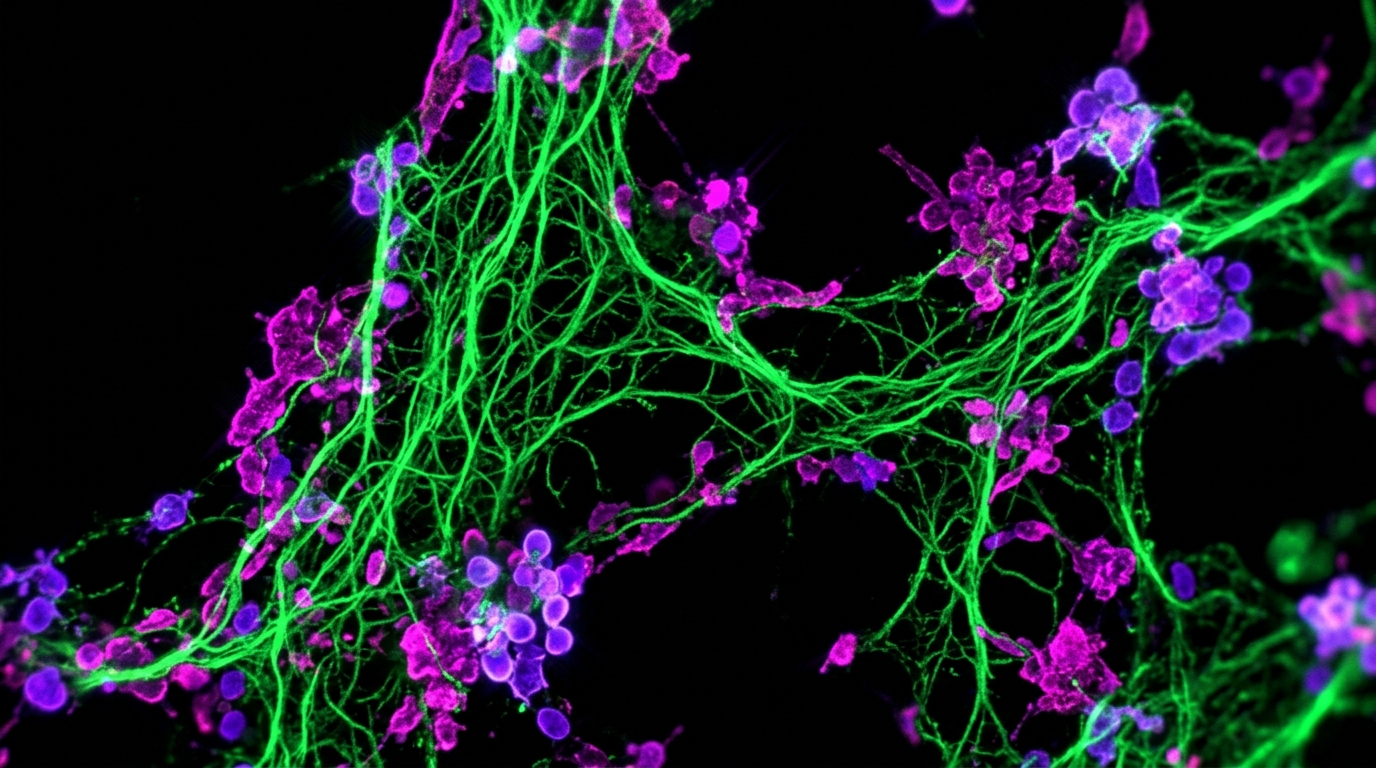
- Fibrin amyloid ("fibrinaloid") microclots. These are fluorescent particles seen in platelet-poor plasma after Thioflavin T staining, described by Resia Pretorius, Douglas Kell and colleagues.
- "Calamari" or white fibrous clots. These are long, pale casts reported by embalmers. Our article on calamari clots and white clot syndrome covers what has been claimed. They are an observation from the embalming trade, not an established clinical finding, and nothing here depends on them.
How do the four compare?
| Term | Made of | Size | Where found | How detected | Conditions | D-dimer rises? | Treatment status |
|---|---|---|---|---|---|---|---|
| Ordinary thrombus (DVT, PE, arterial clot) | Fibrin, platelets, red cells | Millimetres to centimetres | Veins, arteries | Ultrasound or CT, plus D-dimer to help rule out | DVT, pulmonary embolism, heart attack, stroke | Often | Established: blood-thinning medicines (NHS) |
| Microthrombi in tissue | Fibrin and platelets | Inside capillaries and arterioles | Organs, on biopsy or autopsy | Tissue histology; blood tests such as platelets, fibrinogen, D-dimer | DIC, TTP, HUS, severe COVID-19 lungs | Often in DIC; less consistent in TTP and HUS | Treat the cause; DIC has no specific treatment (MedlinePlus) |
| Fibrin amyloid microclots | Amyloid-rich fibrin(ogen) | Reported 1 to 200 µm | Platelet-poor plasma in research labs | Thioflavin T fluorescence microscopy | Reported in Long COVID, ICU sepsis; also seen in healthy samples | Not reliably | None proven; not a recognised clinical test |
| "Calamari" white casts | Dense protein, per our article | Long casts | Reported by embalmers | Not standardised | None recognised | Unknown | None |
Are microclots the same as microthrombi?
No. Microthrombi have a recognised medical meaning. In 2020, Ackermann and colleagues examined lungs from 7 people who died of COVID-19 and found alveolar capillary microthrombi were 9 times as prevalent as in 7 influenza lungs, in a small autopsy series. Thrombotic thrombocytopenic purpura (TTP) is another example: the NHLBI describes it as blood clots forming in small blood vessels throughout the body, which use up platelets.
Fibrin amyloid microclots come from a different method. They're counted in plasma, not found as a clot sticking to a vessel wall. The two overlap in one way: the people who coined "fibrinaloid" argue these particles may block capillaries, which would make them a kind of microthrombus.
What are fibrin amyloid microclots, and why is the term disputed?
A 2021 study by Pretorius and colleagues used proteomics and fluorescence microscopy on plasma from healthy people, people with type 2 diabetes, acute COVID-19 and Long COVID. It reported large anomalous amyloid deposits in Long COVID plasma that resisted fibrinolysis, even after trypsin digestion. A 2022 review by Kell and Pretorius says these particles are typically 1 to 200 µm on their longest axis, which overlaps with the width of many capillaries. For the full picture, see fibrin amyloid microclots research.
Critics reject the word "clot". The 2023 Cochrane review by Fox and colleagues says amyloid is not part of a thrombus, which is a mix of fibrin mesh and platelets. A 2024 reply from the same group says a clot is a network of polymerised fibrin with aggregated platelets, red cells and leukocytes, and that the reported particles aren't clots. They also say these studies haven't shown how the particle counts differ between patients and healthy controls.
Kell, Khan and Pretorius replied in 2024 that the evidence needs assessing properly. A 2024 Blood Advances study from other authors then stained plasma from 104 ICU patients: microclots appeared in 44 patients and in none of 20 healthy controls, and a high number or large size was linked to later DIC. That study doesn't settle what the particles are. The wider debate is in are microclots dangerous and the sibling guide are microclots real.
Why do D-dimer, platelets and fibrinogen behave differently?
Each routine test measures something specific. MedlinePlus explains that D-dimer is a fragment made when a blood clot dissolves, so it rises when the body is making and breaking down clots. That fits DVT, and it fits DIC.
DIC and TTP also change other routine numbers, because they use up clotting ingredients. MedlinePlus says in DIC clotting proteins can be consumed, and NHLBI says TTP uses up platelets. A 2019 review in the Journal of Intensive Care notes that in sepsis-associated DIC both prothrombin time and fibrin degradation products are raised. Abnormal platelets plus fragmented red cells points toward a thrombotic microangiopathy instead.
Fibrin amyloid particles are the odd one out. Kell and Pretorius argue that D-dimer reflects how many clots formed and were dissolved, but can't say how many remained or which were amyloid. That's their explanation for a normal D-dimer alongside symptoms, and it remains a hypothesis. Our D-dimer vs microclot test page walks through it, and the papers don't offer a platelet or fibrinogen threshold that flags the particles.
Next step
Want to see whether Thioflavin T-positive material shows up in your sample?
Our at-home amyloid fibrin test uses Thioflavin T fluorescence microscopy and gives you an observational report to discuss with your clinician.
Is there a micro clotting disorder?
No. "Micro clotting disorder" isn't a recognised diagnosis in any guideline we cite. Recognised conditions where clotting occurs in small vessels include:
- DIC, usually triggered by infection, inflammation or cancer.
- TTP, a rare, life-threatening blood disorder.
- HUS, which often follows a gut infection with E. coli and injures red cells and kidneys.
- Antiphospholipid syndrome, an autoimmune disorder with frequent blood clots.
All of these are diagnosed by haematology or in hospital. A Thioflavin T result isn't a stand-in for any of them.
Can microclots turn into big blood clots?
Nothing cited in this article shows that fibrin amyloid microclots grow into a DVT or pulmonary embolism. The research describes them as plasma particles, while large clots are fibrin, platelet and red-cell masses with their own risk factors. A normal microclot result doesn't rule out a large clot, and an abnormal one doesn't predict one. Our guide to how to test for microclots covers the research method.
Call emergency services for sudden chest pain, severe breathlessness, coughing blood, a swollen painful leg, facial droop, one-sided weakness or sudden confusion. The NHS says a pulmonary embolism needs treatment straight away. Don't wait for any microclot test.
Do blood thinners work on microclots?
For ordinary clots, yes: the NHS treats DVT with blood-thinning medicines. For fibrin amyloid microclots there's no randomised trial showing benefit. Kell and Pretorius have proposed anticoagulant combinations, while Fox and colleagues argue anticoagulants aren't plausible because the particles aren't clots and the drugs have known harms. See our overview of microclots treatment for where that debate stands.
Starting, stopping or combining any blood thinner, antiplatelet or supplement is a decision for your clinician, who can weigh your history and bleeding risk.
Where does an at-home test fit?
Our at-home amyloid test collects a finger-prick dried blood sample, mailed to a partner laboratory in Mexico City. The lab stains it with Thioflavin T, records fluorescence video microscopy and reports the glowing shapes it counts and measures, as described in the amyloid fibrin test guide.
It isn't a diagnosis or a medical device, and it doesn't measure D-dimer, fibrinogen or platelets. It isn't validated against the venous platelet-poor-plasma method used in the published research. It doesn't distinguish the four things on this page and shouldn't replace urgent assessment for a suspected DVT or pulmonary embolism. Any result is observational data to discuss with a clinician, and we don't promise it changes care.
Bottom line
"Micro clots" is a label, not a diagnosis. Ordinary clots and tissue microthrombi have established tests and treatments. Fibrin amyloid microclots are a disputed research finding, and the embalmer reports are a separate, unreviewed observation. When you read a claim, ask which of the four it means and whether it's backed by tissue, plasma or neither. For the basics, start with what microclots are.
Frequently asked questions
What is the difference between a microclot and a blood clot?
A blood clot is a mesh of fibrin, platelets and red cells big enough to block a vein or artery, such as a DVT. 'Microclot' usually means either tiny clots in small vessels (microthrombi) or, in Long COVID research, microscopic fibrin amyloid particles in plasma. Critics argue the second group are amyloid particles, not clots. The two groups differ in structure, tests and treatment.
Are microclots the same as microthrombi?
Not necessarily. Microthrombi are small clots of fibrin and platelets in small vessels, confirmed on tissue samples in conditions like DIC, TTP and severe COVID-19 lungs. 'Microclots' in Long COVID research are Thioflavin T-positive particles in plasma. Some people use the words interchangeably, but the evidence behind each is very different, so check which one a source means.
What is micro thrombosis?
Micro thrombosis means clotting inside the smallest blood vessels, such as capillaries and arterioles, rather than in a large vein or artery. It's a recognised feature of disseminated intravascular coagulation and thrombotic microangiopathies like TTP. It can limit blood flow to organs including the brain and kidneys, and it needs hospital care.
Is there a micro clotting disorder?
No recognised diagnosis is called a micro clotting disorder. Recognised conditions that involve small-vessel clotting include disseminated intravascular coagulation, thrombotic thrombocytopenic purpura, haemolytic uraemic syndrome and antiphospholipid syndrome. Microclots in Long COVID research are a hypothesis, with no validated test, reference range or proven treatment.
Can microclots turn into big blood clots?
None of the studies cited here show that fibrin amyloid microclots grow into large clots such as a DVT or pulmonary embolism. They differ in structure and size, and the research describes them as plasma particles. Large clots have their own risk factors, and symptoms like a swollen painful leg or sudden breathlessness need emergency care.
Do blood thinners work on microclots?
For ordinary clots like DVT, the NHS treats with blood-thinning medicines. For fibrin amyloid microclots there's no controlled trial showing that anticoagulants help, and critics argue they aren't plausible treatment because the particles aren't clots. Whether any blood thinner is appropriate is a decision for your clinician, since these drugs carry bleeding risks.
Sources
- DVT (deep vein thrombosis). NHS, 2024
- D-dimer test. MedlinePlus, National Library of Medicine, 2024
- Disseminated intravascular coagulation (DIC). MedlinePlus, National Library of Medicine, 2024
- Platelet Disorders: Thrombotic Thrombocytopenic Purpura (TTP). NHLBI, National Institutes of Health, 2024
- Antiphospholipid syndrome (APS). MedlinePlus, National Library of Medicine, 2024
- Hemolytic-uremic syndrome. MedlinePlus, National Library of Medicine, 2024
- Sepsis-associated disseminated intravascular coagulation and its differential diagnoses. Journal of Intensive Care, 2019
- Pulmonary Vascular Endothelialitis, Thrombosis, and Angiogenesis in Covid-19. New England Journal of Medicine, 2020
- Persistent clotting protein pathology in Long COVID/Post-Acute Sequelae of COVID-19 (PASC) is accompanied by increased levels of antiplasmin. Cardiovascular Diabetology, 2021
- A central role for amyloid fibrin microclots in long COVID/PASC: origins and therapeutic implications. Biochemical Journal, 2022
- Plasmapheresis to remove amyloid fibrin(ogen) particles for treating the post-COVID-19 condition. Cochrane Database of Systematic Reviews, 2023
- Reported particles are not blood clots, so anticoagulant drugs are not a plausible treatment. Research and Practice in Thrombosis and Haemostasis, 2024
- Fibrinaloid microclots in long COVID: assessing the actual evidence properly. Research and Practice in Thrombosis and Haemostasis, 2024
- Microclots, as defined by amyloid-fibrinogen aggregates, predict risks of disseminated intravascular coagulation and mortality. Blood Advances, 2024
At-Home Amyloid Test
Want to see whether Thioflavin T-positive material shows up in your sample?
Our at-home amyloid fibrin test uses Thioflavin T fluorescence microscopy and gives you an observational report to discuss with your clinician.
Next steps
- What Are Amyloid Microclots? Definition, Causes and EvidenceWhat are amyloid microclots? A plain definition of these fibrin particles in blood samples, how they form, what studies found and what Cochrane says.
- How to Test for Microclots: Methods, Labs and LimitsMicroclots test options compared: Thioflavin T microscopy, flow cytometry and at-home kits, why D-dimer misses microclots, and how to read a result.
- Micro Blood Clots Symptoms: Microclots Symptoms GuideMicro blood clots symptoms include fatigue, brain fog and breathlessness. Learn why microclots may cause capillary hypoperfusion and what tests can show.

Tim Ottowitz
Founder & Research Lead
Tim Ottowitz founded Amyloid Test and writes its Science Hub, turning fibrin amyloid and spike protein research into plain-language guides that stay close to the published evidence.
Keep reading
Microclot Test Kit: Best At-Home Options Compared (2026)
Looking for a microclot test kit? Compare at-home kits, clinics and routine lab panels by price, sample type and what each can actually show.
Amyloid Microclots: What the Research Shows So Far
What studies show about amyloid microclots in Long COVID: how fibrin forms them, why they resist breakdown, the key findings and the open questions.
Anomalous Amyloid Microclots: Phenotypes and Phosphatidylserine
Explore the biophysics of anomalous amyloid microclots. Discover the 4 structural phenotypes, phosphatidylserine membrane flipping, and ThT microscopy.