Spike Protein Detox: What the Evidence Actually Shows
Short answer
Spike protein detox has no proven method. No supplement or protocol has been shown in a human trial to remove spike protein from the body. The popular nattokinase, bromelain and curcumin regimen comes from a 2023 rationale paper, not a trial, and the lab studies behind it used cell dishes, purified proteins or computer models.
Key takeaways
- 1The 'base spike detox' regimen of nattokinase, bromelain and curcumin was published in 2023 as a rationale paper whose authors wrote that no therapeutic claims can be made until randomized trials are done.
- 2The spike-degradation findings are in vitro: nattokinase in cell lysates and cultured cells, bromelain with acetylcysteine on purified protein and virus in culture, and curcumin in computer modelling.
- 3Spike has been detected in the blood of some people months after infection, and a small preprint reported higher levels in people with post-vaccination syndrome, but neither study tested any detox.
- 4Nattokinase, bromelain and turmeric can add to bleeding risk, so any decision to take them belongs with a clinician who knows your medicines.
- 5Our test does not measure spike protein, so it can't show whether a detox worked.
Spike protein detox has no proven method: no supplement or protocol has been shown in a human trial to remove spike protein from the body. The best evidence for the popular nattokinase, bromelain and curcumin regimen is lab-dish work plus a 2023 rationale paper, not a clinical trial. This page goes through each claim, the model it was tested in, and what is and isn't known, so you can judge a protocol before spending money on it.
What is the "spike protein detox protocol"?
It's usually the "base spike detoxification" regimen of nattokinase, bromelain and curcumin. It was described in a 2023 paper by McCullough, Wynn and Procter in the Journal of American Physicians and Surgeons, titled "Clinical Rationale for SARS-CoV-2 Base Spike Protein Detoxification" (McCullough et al., 2023). The paper is a narrative argument for why the three agents might help, not a study of patients.
The authors were direct about that limit. They wrote that the effect on outcomes such as quality of life and symptom scores is unknown, and that "no therapeutic claims can be made" until large randomized placebo-controlled trials are done. They also noted that no such trial was registered on clinicaltrials.gov when they wrote it.
The paper's disclosure says McCullough receives partial salary support and holds an equity position in a company that sells dietary supplements, including one containing nattokinase. That doesn't make the science wrong, but it's context a reader should have. FactCheck.org also reported that the journal isn't indexed by Medline (FactCheck.org, 2023).
What did the lab studies actually show?
Each ingredient has a lab result behind it, and none was tested for spike clearance in people. The table keeps each finding tied to its model.
| Ingredient | Claim | Best evidence | Model | Human trial of spike clearance? |
|---|---|---|---|---|
| Nattokinase | Breaks down spike protein | Tanikawa et al., 2022: spike was degraded in cell lysates in a dose- and time-dependent way, and on the surface of cultured cells | Cell lysates and cultured cells | None found |
| Bromelain (with acetylcysteine) | Breaks down spike protein | Akhter et al., 2021: the combination disrupted recombinant spike and envelope proteins and inactivated virus in culture; single agents did not inactivate the virus | Purified proteins and cultured virus | None found; authors named nasal use in early infection as the next step |
| Curcumin | Blocks spike from binding cells | Computer modelling, as described by the 2023 rationale paper and FactCheck.org | In silico | None found |
| The three combined | Clears spike in people | McCullough et al., 2023, a rationale paper | Narrative proposal | No |
The nattokinase paper's own conclusion was cautious: it suggested nattokinase "exhibits potential" against infection through spike degradation (Tanikawa et al., 2022). That's a statement about a possible antiviral effect in cells, not about clearing spike from a person who was vaccinated or infected months ago. The bromelain study tested a combination with acetylcysteine against the virus and its proteins (Akhter et al., 2021), so it says little about bromelain alone.
Our own deep dives cover the same ground for microclots: see supplements for microclots and the nattokinase and lumbrokinase review.
Has spike protein detox been tested in people?
We searched PubMed on 18 November 2026 for nattokinase together with spike protein and clinical-trial publication types and found no results. We also found no published study that measured spike protein before and after nattokinase, bromelain or curcumin in people. That's a statement about what we found, not proof that nobody has tried.
FactCheck.org asked clinicians about the regimen in 2023. Dr. Benjamin Abramoff of the University of Pennsylvania said he knew of no clinical trials showing efficacy for long COVID, alone or in combination. Dr. Kristin Englund of Cleveland Clinic said there was no evidence the supplements work for long COVID.
Is spike protein found in people months later?
Sometimes, in small studies. In a retrospective pilot study, Swank and colleagues analyzed plasma from 63 people previously infected with SARS-CoV-2, 37 of whom had post-acute sequelae of COVID-19 (PASC). They detected spike in 60% of the PASC patients and none of the COVID-19 patients without PASC, in samples taken up to 12 months after diagnosis (Swank et al., Clinical Infectious Diseases). The authors called their sample size small.
After vaccination, a Yale LISTEN preprint compared 42 people with post-vaccination syndrome against 22 healthy controls and reported higher circulating spike protein in the affected group (Bhattacharjee et al., 2025). It's a cross-sectional preprint, so it shows an association at one point in time.
Neither study tested a detox. Finding spike in blood is a reason to study persistence, not evidence that a capsule clears it. For what spike assays measure, see our spike protein test guide and antibody versus antigen testing.
Next step
Want to see whether amyloid-positive material shows up in your own sample?
Our at-home amyloid fibrin test gives observational microscopy data to discuss with your clinician. It doesn't measure spike protein and isn't a diagnosis.
What do regulators and fact-checkers say?
The FDA says it doesn't have the authority to approve dietary supplements before they're marketed (FDA). The NIH's NCCIH adds that supplements you buy may differ in important ways from the products tested in studies (NCCIH). So even a positive lab result wouldn't tell you what a particular bottle contains.
We didn't find an FDA or FTC action that names spike detox products specifically. FactCheck.org's 2023 review concluded there wasn't evidence that people need a "spike protein detoxification" regimen after vaccination, and that the protocol hadn't been shown to help people recover from long COVID.
Are spike detox supplements safe?
Each can affect bleeding, and the risk depends on your medicines. Memorial Sloan Kettering says nattokinase may increase bleeding risk with blood-thinning drugs (MSK, nattokinase). It says preclinical studies suggest bromelain may increase bruising and bleeding with warfarin and other blood thinners (MSK, bromelain), and that preclinical studies and a case report suggest turmeric can raise bleeding risk with anticoagulants or antiplatelets (MSK, turmeric). The rationale paper itself calls bleeding the main caveat for nattokinase.
Unexpected bruising or black stools aren't a "detox reaction" and need medical attention; our page on clot-busting flares versus bleeding explains the difference. Call emergency services for sudden chest pain, severe breathlessness, a swollen painful leg, face drooping, one-sided weakness or vomiting blood.
Questions to ask your doctor
Whether to take any of these is a decision for you and your clinician, especially if you use anticoagulants, antiplatelets or are facing surgery. These questions can help the conversation:
- Could something other than spike protein explain my symptoms, and which standard tests would check?
- Do my current medicines interact with nattokinase, bromelain or turmeric?
- If a supplement is on the table, what would we track to see whether it helps, and when would we reassess?
- Is a clinical trial for these symptoms recruiting nearby?
For symptom patterns and pacing, see our overview of post-vaccination syndrome symptoms and what has been tried in microclots treatment.
Where does an at-home test fit?
Our at-home amyloid test doesn't measure spike protein, so it can't show whether a spike detox worked. It's a finger-prick dried blood sample, stained with Thioflavin T and imaged at a partner laboratory in Mexico City, and the report counts the glowing shapes and measures their size. Some people use an at-home microclot test to see whether amyloid-positive material appears in their sample.
It's not a diagnosis, and it hasn't been validated against the venous platelet-poor-plasma method used in published microclot research. We can't promise a result will change your care. To see how the methods differ, read how to test for microclots.
Frequently asked questions
Does spike protein detox work?
It hasn't been shown to. The proposed supplements degraded spike protein in lab dishes, but we found no published human trial that measured spike protein before and after nattokinase, bromelain or curcumin. Fact-checkers and clinicians quoted by FactCheck.org in 2023 said there was no evidence that the regimen helps in people.
How do you detox spike protein from the body?
No method has been proven. Some studies detect spike in blood for months in some people, but nobody has shown which approach, if any, clears it or whether clearing it improves symptoms. If you have ongoing symptoms, a clinician can check for common and treatable causes first.
Do spike protein detox supplements like nattokinase work?
Nattokinase degraded spike protein in cell lysates and on cultured cells in a 2022 study, which is a lab result. It was not tested in animals or people for spike clearance in that paper. A lab-dish result can't tell you what an oral capsule does in the body, and it can raise bleeding risk.
Is there a detox from COVID vaccine?
No detox has been shown to reverse effects of COVID vaccination. If symptoms began after a vaccine and persist, the useful step is a medical workup for other causes and symptom-focused care. Researchers are still studying post-vaccination syndrome, and no treatment has been proven.
Are nattokinase, bromelain and curcumin safe together?
Not for everyone. Memorial Sloan Kettering lists bleeding concerns for each with anticoagulant or antiplatelet drugs, and the 2023 rationale paper itself says patients need close monitoring because of anticoagulant effects. Check with the clinician who prescribes your medicines before taking any of them.
Can a test show whether a spike detox worked?
Only a spike-specific assay measures spike protein, and the ones used in studies are research assays, and we found no agreed clinical cut-off. Antibody tests measure your immune response, not circulating spike. Microclot staining doesn't measure spike either, so none of these can confirm that a detox cleared it.
Sources
- Clinical Rationale for SARS-CoV-2 Base Spike Protein Detoxification in Post COVID-19 and Vaccine Injury Syndromes. Journal of American Physicians and Surgeons, 2023
- Degradative Effect of Nattokinase on Spike Protein of SARS-CoV-2. Molecules, 2022
- The Combination of Bromelain and Acetylcysteine (BromAc) Synergistically Inactivates SARS-CoV-2. Viruses, 2021
- Posts Push Unproven 'Spike Protein Detoxification' Regimen. FactCheck.org, 2023
- Persistent Circulating Severe Acute Respiratory Syndrome Coronavirus 2 Spike Is Associated With Post-acute Coronavirus Disease 2019 Sequelae. Clinical Infectious Diseases, 2023
- Immunological and Antigenic Signatures Associated with Chronic Illnesses after COVID-19 Vaccination (preprint). medRxiv, 2025
- Using Dietary Supplements Wisely. National Center for Complementary and Integrative Health (NIH), 2026
- Questions and Answers on Dietary Supplements. U.S. Food and Drug Administration, 2026
- Nattokinase. Memorial Sloan Kettering Cancer Center, 2026
- Bromelain. Memorial Sloan Kettering Cancer Center, 2026
- Turmeric. Memorial Sloan Kettering Cancer Center, 2026
At-Home Amyloid Test
Want to see whether amyloid-positive material shows up in your own sample?
Our at-home amyloid fibrin test gives observational microscopy data to discuss with your clinician. It doesn't measure spike protein and isn't a diagnosis.
Next steps
- Spike Protein Test: Antibody, Antigen, and Downstream TestingLearn how spike protein tests work. Why antibody assays measure memory rather than active protein, and how downstream amyloid testing reveals microclots.
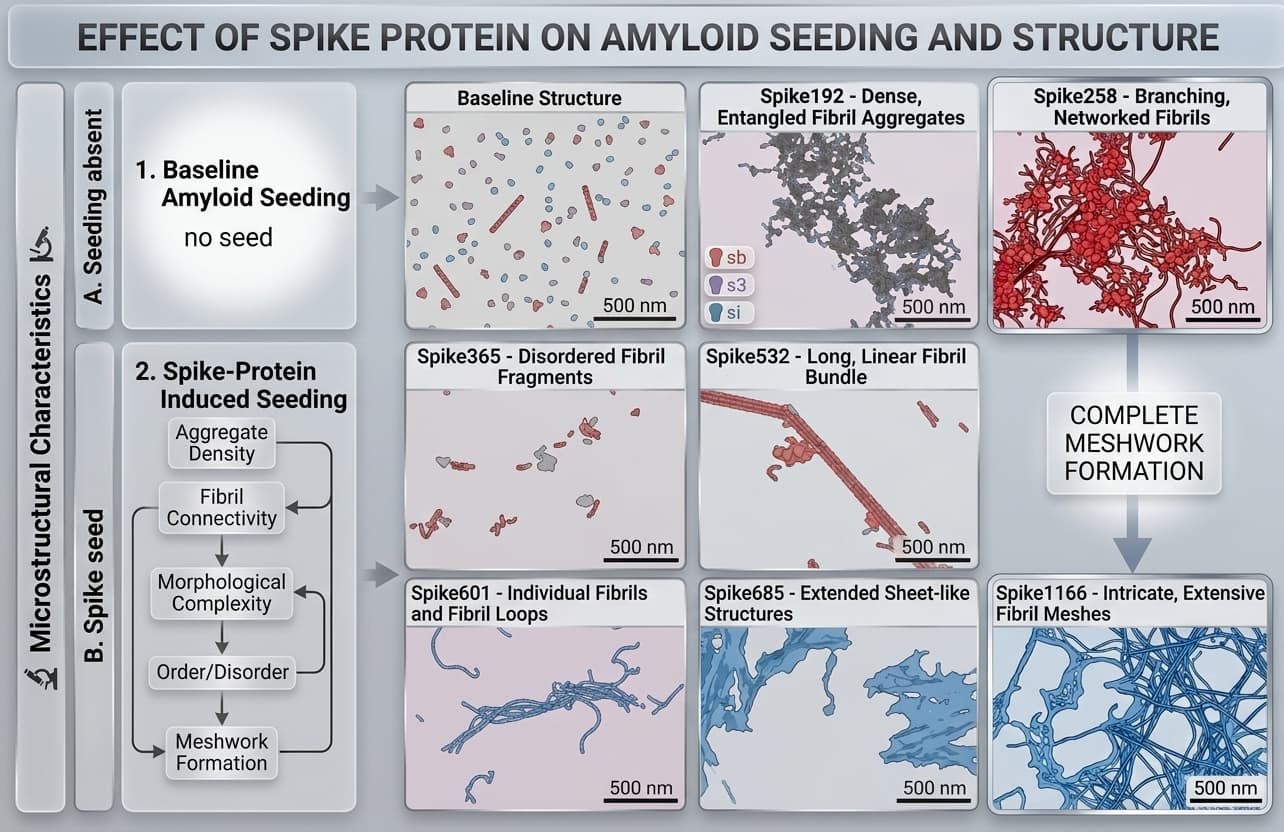
- Spike Protein Amyloid Fibrils: How Spike685 Makes Clots Resist LysisHow spike protein amyloid fibrils change fibrin clots: what the 2025 Linköping study found for Spike601 and Spike685, and what it cannot yet tell us.
- Amyloid Fibril Test: Methods Used to Detect Amyloid FibrilsHow an amyloid fibril test works: Thioflavin T, Congo red, electron microscopy, X-ray diffraction and seeding assays compared, with which are clinical.

Tim Ottowitz
Founder & Research Lead
Tim Ottowitz founded Amyloid Test and writes its Science Hub, turning fibrin amyloid and spike protein research into plain-language guides that stay close to the published evidence.
Keep reading
Lipid Nanoparticle Endosomal Escape: The Numbers Never Measured
A plain-English guide to lipid nanoparticle endosomal escape, the four steps of mRNA delivery, and which numbers were never measured before rollout.
Lipid Nanoparticle Blood Distribution: How mRNA Circulates in Humans
Discover how lipid nanoparticle blood distribution research reveals intact mRNA and SM-102 lipids circulating in human blood for up to 15 days.
Lipid Nanoparticle Membrane Dysfunction: What the Omics Data Show
A plain-English guide to lipid nanoparticle membrane dysfunction, explaining how ionizable lipids alter cell signaling, metabolism, and membranes.