Post-Vaccination Syndrome: Symptoms, Duration and the Spike Research
Short answer
Post-vaccination syndrome (PVS) is a proposed name for chronic fatigue, exercise intolerance, brain fog, tingling and palpitations some people report after COVID-19 vaccination. It isn't a formally recognized diagnosis yet. Research points to three possible mechanisms: spike protein persisting for months or longer, spike fragments forming amyloid fibrils that make clots resist breakdown, and immune changes. None is proven to cause it.
Key takeaways
- 1PVS describes chronic symptoms some people report after COVID-19 vaccination; it isn't formally recognized, and recognized rare adverse events like myocarditis are separate.
- 2Spike protein or vaccine mRNA has been detected weeks to months after vaccination, and in a Yale preprint some people with PVS had spike more than 700 days later.
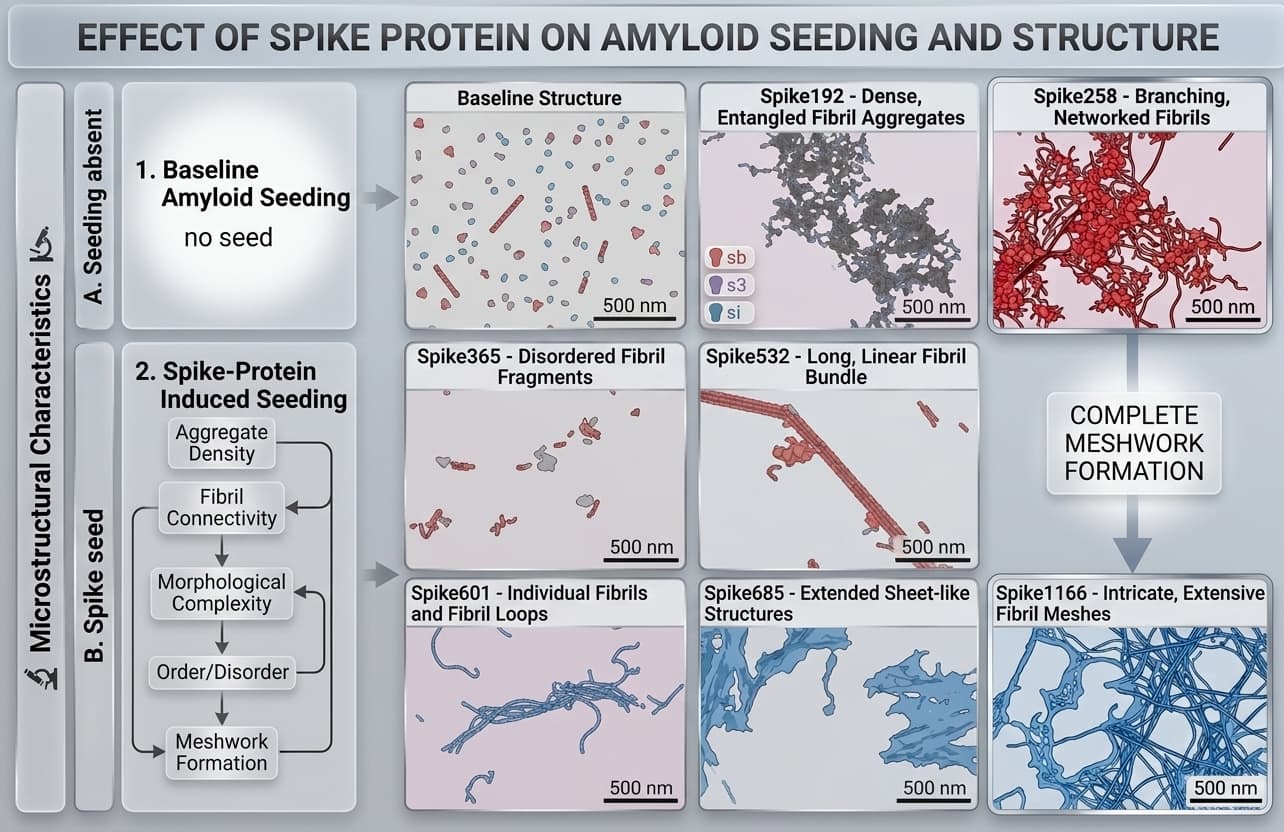
- 3In lab studies, neutrophil elastase cuts spike into fragments that form amyloid fibrils, and Spike685 fibrils make fibrin clots resist plasmin.
- 4A 2026 study of 14 people with post-vaccination or post-infection syndrome found amyloid-positive microclot material, with a profile only partly overlapping long COVID.
- 5There's no validated test or treatment yet; most commercial spike tests measure antibodies, not spike itself.
"Is post-vaccination syndrome real?", "how long does it last?" and "is there a test?" are among the most common questions in patient communities. This guide answers them using the spike protein and microclot research we've covered across our Science Hub, and is clear about where that research stops.
What is post-vaccination syndrome?
Post-vaccination syndrome (PVS), also called post-COVID-19 vaccine syndrome (PCVS), is a proposed name for chronic symptoms that start after COVID-19 vaccination and persist for months. It isn't a formally recognized diagnosis. Yale researchers note it remains unrecognized by medical authorities, and a 2025 Heliyon commentary argues it deserves clinical recognition.
It's separate from the recognized rare adverse events of COVID-19 vaccines, such as myocarditis and Guillain-Barré syndrome. Those have clear definitions and were confirmed in large safety studies, including a Global Vaccine Data Network cohort of 99 million people.
What are the symptoms?
| Symptom | How people describe it | Overlaps with |
|---|---|---|
| Fatigue | Exhaustion not relieved by rest | Long COVID, ME/CFS |
| Exercise intolerance | Feeling worse after exertion | Long COVID, ME/CFS |
| Brain fog | Trouble concentrating, memory slips | Long COVID |
| Numbness, tingling, nerve pain | Pins and needles, burning in hands or feet | Small fiber neuropathy |
| Palpitations, dizziness on standing | Racing heart, lightheadedness, adrenaline-like surges | POTS |
| Tinnitus | Ringing in the ears starting soon after a dose | Many post-viral conditions |
| Muscle twitching, internal vibrations | Fasciculations, buzzing sensations | Small fiber neuropathy, dysautonomia |
Muscle twitching worries many people because they've read about ALS. Widespread twitching with normal strength is far more often benign, but any new weakness, swallowing or speech problems need prompt neurological review. Almost all of these symptoms overlap with long COVID, and many people with PVS have also had COVID-19. That makes the two hard to separate, which is also why the research below often studies them together.
What could cause it? Three lines of research
Our Science Hub has followed three lines of evidence. Each has lab or small-cohort support. None has been shown to cause PVS.
1. Spike protein that persists
Normally, spike made after vaccination is cleared within days to weeks. Several studies found it lasting longer in some people:
- Vaccine mRNA was detected in blood up to 28 days after vaccination.
- Mass spectrometry found a vaccine-specific spike fragment in half of tested samples, up to 187 days later.
- Patterson and colleagues reported S1 spike inside CD16+ monocytes for up to 245 days in people with PCVS who tested negative for prior infection.
- In the 2025 Yale preprint, some of the 42 people with PVS had spike more than 700 days after their last dose. Others with PVS had none, so spike can't explain every case.
Our guide to spike antibody vs antigen testing explains why these specialized assays differ from commercial "spike tests," which measure antibodies.
2. Spike fragments that form amyloid fibrils
Amyloid is a stacked, extremely stable protein shape. Linköping researchers found spike has amyloid-prone segments, and that neutrophil elastase cuts spike into fragments that form amyloid fibrils. Intact spike didn't. We cover this in neutrophil elastase and spike protein.
Those fibrils can affect clotting. In a 2025 Biochemistry study, Spike685 fibrils made fibrin clots resist plasmin, the clot-dissolving enzyme. Earlier, recombinant spike S1 had made fibrin harder to break down in plasma. Details are in spike protein amyloid fibrils.
The same Linköping group reported in a preprint that spike amyloid can speed up misfolding of prion protein and amyloid-beta in test tubes. That's a lab finding, not evidence of brain disease in people, as we explain in spike protein and Alzheimer's.
3. Microclots and immune changes
A 2026 proteomics study compared 14 people with post-vaccination or post-infection syndrome to 16 controls. It found amyloid-positive microclot material and altered coagulation and immune proteins. The signature only partly overlapped long COVID's. Our review of post-vaccination microclots weighs this evidence, and what microclots are covers the basics.
The Yale preprint also found immune differences: fewer effector CD4+ T cells, more TNF-alpha-producing CD8+ T cells, and more Epstein-Barr virus reactivation.
Next step
Looking for objective data on your own sample?
Our at-home amyloid fibrin test records Thioflavin T microscopy you can share with your doctor. It isn't a PVS test, but it shows one thing routine labs don't look at.
See the at-home testHow long does post-vaccination syndrome last?
There isn't a reliable answer. People report symptoms lasting months to years, and the spike findings show some biological changes can persist a long time. Others improve gradually. Yale's Akiko Iwasaki called the findings far from a final answer, and nobody can predict an individual's course yet.
Is there a test for post-vaccination syndrome?
No validated test exists. Diagnosis means ruling out other causes, the same approach used for long COVID, where routine blood tests are usually normal. What's available, and what each shows:
| Test | What it measures | What it can't tell you |
|---|---|---|
| Spike antibody (anti-S1/RBD) | Immune memory of vaccination or infection | How much spike is in your body now |
| Spike antigen (mass spectrometry) | Spike protein or fragments themselves | Whether spike causes your symptoms |
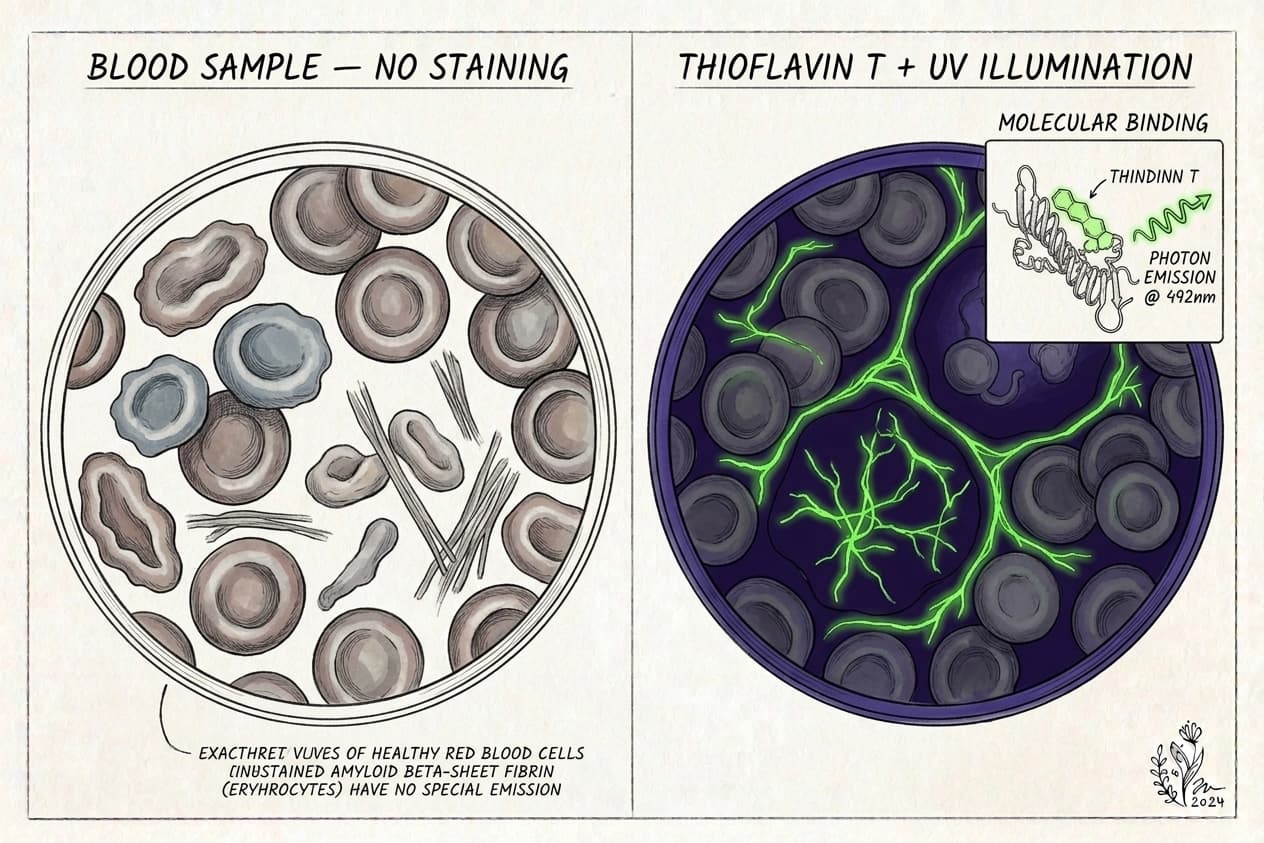
| Microclot imaging (Thioflavin T) | Amyloid-positive fibrin deposits | The cause of those deposits |
| Routine labs | Anemia, thyroid, organ function | Most PVS-related changes |
Our at-home amyloid test is the microclot imaging route. It uses Thioflavin T fluorescence microscopy on a finger-prick sample. It isn't a PVS test, doesn't measure spike, and isn't a diagnosis.
What helps?
There's no proven treatment. Doctors generally rule out other causes, treat specific symptoms such as POTS-type dizziness or nerve pain, and recommend pacing when exertion makes things worse. Be cautious about expensive "spike detox" protocols. Our spike persistence article explains why downstream treatments can't switch off a persistent source, and our review of nattokinase for microclots covers what enzymes do and don't do.
Where to go next
To compare testing options, read how to test for microclots. For treatments people ask about most, see plasmapheresis for long COVID and triple therapy.
Frequently asked questions
Is post-vaccination syndrome real?
People's symptoms are real, and researchers at Yale and elsewhere are studying them. What's unsettled is whether PVS is a distinct condition, what causes it and how common it is. Medical authorities haven't formally recognized it yet, partly because studies so far are small. That's a reason for more research, not for dismissing patients.
How long does post-vaccination syndrome last?
Nobody knows the typical course. People in published studies report symptoms lasting months to years. In the Yale preprint, some participants still had detectable spike protein more than 700 days after their last dose, while others with PVS had none. Without large long-term studies there's no reliable estimate, so be wary of confident timelines.
Can spike protein cause microclots after vaccination?
It's a research hypothesis with lab support but no proof in patients. Recombinant spike S1 made fibrin harder to break down in plasma, and fibrils from the Spike685 fragment made clots resist plasmin in purified systems. A small 2026 study found amyloid-positive microclot material in people with post-vaccination or post-infection syndrome, but couldn't fully separate vaccination from prior infection.
Is there a test for post-vaccination syndrome?
No validated test exists. Commercial spike tests usually measure antibodies, which reflect vaccination and infection history rather than spike in your body now. Spike antigen assays, immune profiling and microclot imaging are research tools without diagnostic cutoffs. Doctors usually diagnose by excluding other causes of your symptoms.
How is post-vaccination syndrome treated?
There's no proven treatment. Doctors generally rule out other causes and treat specific symptoms, and some patients use pacing borrowed from long COVID care. Spike detox protocols haven't been shown in controlled trials to remove spike or improve outcomes, and downstream treatments can't switch off a persistent source if one exists.
Sources
- Immunological and Antigenic Signatures Associated with Chronic Illnesses after COVID-19 Vaccination (preprint). medRxiv, 2025
- Immune markers of post-vaccination syndrome indicate future research directions. Yale News, 2025
- Detection of S1 spike protein in CD16+ monocytes up to 245 days in SARS-CoV-2-negative post-COVID-19 vaccine syndrome (PCVS) individuals. Human Vaccines & Immunotherapeutics, 2025
- SARS-CoV-2 spike mRNA vaccine sequences circulate in blood up to 28 days after COVID-19 vaccination. APMIS, 2023
- Detection of recombinant Spike protein in the blood of individuals vaccinated against SARS-CoV-2. Proteomics Clinical Applications, 2023
- Amyloidogenesis of SARS-CoV-2 Spike Protein. Journal of the American Chemical Society, 2022
- SARS-CoV-2 Spike Protein Amyloid Fibrils Impair Fibrin Formation and Fibrinolysis. Biochemistry, 2025
- SARS-CoV-2 spike protein S1 induces fibrin(ogen) resistant to fibrinolysis: implications for microclot formation in COVID-19. Bioscience Reports, 2021
- Proteomic signatures of COVID-19 Post-Vaccination/Post-Infection Syndrome (PV/PIS): insights into immune dysregulation and coagulopathy. Frontiers in Cellular and Infection Microbiology, 2026
- Breaking the silence: Recognizing post-vaccination syndrome. Heliyon, 2025
- COVID-19 vaccines and adverse events of special interest: A multinational Global Vaccine Data Network (GVDN) cohort study of 99 million vaccinated individuals. Vaccine, 2024
At-Home Amyloid Test
Looking for objective data on your own sample?
Our at-home amyloid fibrin test records Thioflavin T microscopy you can share with your doctor. It isn't a PVS test, but it shows one thing routine labs don't look at.
Next steps
- Post-Vaccination Microclots: What the Spike-Fibrin Research ShowsWhat research says about microclots after mRNA vaccination: the shared spike sequence argument, the PV/PIS cohort findings, and where the evidence stops.
- Amyloid Fibrin Test: How Fibrin Amyloid Microclots Are DetectedWhat an amyloid fibrin test is, how Thioflavin T microscopy spots fibrin amyloid microclots, how it differs from D-dimer, and what it can't tell you.
- Spike Protein Amyloid Fibrils: How Spike685 Makes Clots Resist LysisHow spike protein amyloid fibrils change fibrin clots: what the 2025 Linköping study found for Spike601 and Spike685, and what it cannot yet tell us.

Tim Ottowitz
Founder & Research Lead
Tim Ottowitz founded Amyloid Test and writes its Science Hub, turning fibrin amyloid and spike protein research into plain-language guides that stay close to the published evidence.
Keep reading
COVID Vaccine Harms: What the 2025 JPandS Review Argues
A plain-language walkthrough of the 2025 JPandS review on COVID vaccine harms: what it claims, which sources hold up, and where the evidence is weak.
Spike Protein Antibody vs Antigen Testing: What Each One Measures
Spike antibody tests measure immune memory, not spike protein. What antigen testing adds, why detox protocols stall, and what a serious panel includes.
Does Long COVID Show Up on Blood Tests? What Normal Results Miss
Why routine blood tests look normal in long COVID: amyloid fibrin microclots resist breakdown, spike forms amyloid fibrils, and panels miss both.