Nattokinase Flare vs Bleeding: Microclot Symptoms and Risks
English Narration
At-Home Blood Spot • 6K Video Microscopy • $160
Short answer
Worsening symptoms or bruising when starting fibrinolytic enzymes like nattokinase or lumbrokinase are often falsely labeled as a healing crisis or Herxheimer detox reaction. True Jarisch-Herxheimer reactions only occur with dying spirochete bacteria. In microclot management, symptom spikes reflect either rapid capillary reperfusion and trapped inflammatory cytokine release, or active anticoagulant-induced bleeding requiring immediate medical assessment.
Key takeaways
- 1Fibrinolytic enzymes do not cause classic Jarisch-Herxheimer reactions because blood clots are not living bacterial organisms.
- 2Reperfusion flares stem from sudden capillary re-opening, oxidative stress, and the release of trapped vasoactive mediators.
- 3Unexplained bruising, petechiae, nosebleeds, or black stools are red-flag bleeding signals, not harmless signs of detoxification.
- 4Combining oral enzymes with pharmaceutical antiplatelet or anticoagulant medications dramatically magnifies serious hemorrhage risks.
- 5Pre- and post-protocol testing with 6K ThT fluorescence microscopy provides objective visual evidence rather than subjective guesswork.
In patient forums dedicated to post-viral syndromes, Long COVID, and vaccine injury, a dangerous piece of medical folklore has taken deep root: the belief that feeling severely ill after starting clot-dissolving therapies is a necessary "healing crisis".
When patients taking oral enzymes like nattokinase, serrapeptase, or lumbrokinase report splitting headaches, intense brain fog, or mysterious purple bruises, well-meaning peers often tell them: "You're just Herxing! Push through it, the clots are dissolving!"
This advice is medically inaccurate and potentially dangerous. Blood clots are not bacterial infections, and dismissing worsening physical signs as a "detox reaction" can blind patients to serious vascular complications or active internal hemorrhage.
This clinical safety guide dismantles the Herxheimer myth in fibrinolytic therapy, details the real physiological causes of enzyme flares, identifies critical red-flag bleeding symptoms, and explains how to evaluate your progress safely.
The Jarisch-Herxheimer Myth in Microclot Management
To evaluate supplement reactions safely, you must understand where the concept of a "Herx" actually originated.
The Jarisch-Herxheimer reaction was first described in the early 20th century by dermatologists Adolf Jarisch and Karl Herxheimer. It is a well-defined medical phenomenon that occurs when patients with spirochetal bacterial infections (such as secondary syphilis, Lyme disease, or leptospirosis) receive potent antimicrobial antibiotics like penicillin.
When high-dose antibiotics kill millions of living spirochetes simultaneously, the dying bacteria burst open, releasing massive quantities of endotoxins and lipoproteins into the bloodstream. This massive microbial debris triggers a surge of inflammatory cytokines (TNF-alpha, IL-6, and IL-8), causing fever, rigors, and hypotension that peaks within 24 hours and resolves quickly.
A blood clot is not a living spirochete. Fibrin amyloid microclots are inert, misfolded protein aggregates formed from human fibrinogen and platelets. As detailed in our primer on what microclots are, they contain no bacterial genomes or foreign cell walls.
Taking an enzyme to break down a protein mesh does not trigger a Jarisch-Herxheimer reaction. When patients feel worse after taking nattokinase, something else is occurring.
The Two Real Drivers of "Clot-Busting Flares"
If a nattokinase flare is not a Herxheimer reaction, why do many patients feel genuinely terrible after starting enzyme therapy? Scientific literature identifies two primary physiological mechanisms:
1. Ischemia-Reperfusion and Vasoactive Mediator Release
Capillaries blocked by amyloid microclots suffer from chronic hypoperfusion: the surrounding tissue has adapted to low oxygen delivery.
When a proteolytic enzyme begins digesting the fibrin backbone, microvessels that have been stagnant for months suddenly re-open. This rapid restoration of blood flow is known as capillary reperfusion.
While reperfusion is the ultimate therapeutic goal, the sudden influx of oxygen into chronically hypoxic tissue generates a temporary spike in reactive oxygen species (ROS). Furthermore, as Proteorius and Kell demonstrated via mass spectrometry, microclots physically entrap high concentrations of inflammatory mediators, including von Willebrand factor, platelet factor 4, and bioactive lipids.
When the clot structure breaks down, these trapped molecules wash downstream into the venous circulation, triggering mast cell degranulation, transient endothelial inflammation, and temporary flu-like malaise.
2. Microvascular Bleeding and Autonomic Instability
Proteolytic enzymes like nattokinase and lumbrokinase do not exclusively target pathological microclots. They possess systemic fibrinolytic and mild anticoagulant properties.
In patients with inflamed, fragile vascular endothelium, dissolving microclots too aggressively can cause microvascular leakage (erythrocyte extravasation). Micro-bleeding into interstitial tissues creates localized pain, swelling, and autonomic distress.
If a patient already suffers from postural orthostatic tachycardia syndrome (POTS), changes in microvascular tone can cause sudden blood pooling in the splanchnic circulation, causing extreme dizziness, palpitations, and near-syncope.
Fibrinolytic Flare vs Active Bleeding: Key Distinctions
Differentiating between a manageable reperfusion flare and an impending bleeding emergency is vital. Use the following clinical reference table to evaluate symptoms:
| Symptom Category | Likely Reperfusion Flare | Warning / Bleeding Red Flag |
|---|---|---|
| Onset Timing | Gradual increase 2 to 6 hours post-dose | Sudden onset or progressively worsening intensity |
| Fatigue & Cognition | Heavy fatigue, familiar brain fog flare | Sudden lethargy, severe disorientation, confusion |
| Headache | Dull, diffuse tension or neck ache | Sudden "thunderclap" headache, visual loss, vomiting |
| Skin Manifestations | Mild flushing or warm extremities | Spontaneous ecchymosis (unexplained bruises), petechiae |
| Gastrointestinal | Mild nausea, transient loose stools | Coffee-ground emesis, black tarry stools (melena) |
| Mucosal Membranes | Dry mouth, sinus congestion | Spontaneous nosebleeds (epistaxis), bleeding gums |
| Urinary Tract | Darker concentrated urine | Frank red or pink blood in urine (hematuria) |
If you observe any red-flag bleeding symptoms, stop all enzyme supplements immediately and seek urgent clinical evaluation.
Compounding the Danger: Triple Therapy Bleeding Risks
The risk profile changes dramatically when patients move from over-the-counter enzyme supplements to combination pharmaceutical regimens.
In 2021, research groups in South Africa explored combination antithrombotic regimens for Long COVID, commonly referred to as "triple therapy". As detailed in our analysis of triple therapy for Long COVID, this protocol combined a direct oral anticoagulant (such as apixaban) with two antiplatelet agents (clopidogrel and aspirin).
While the authors reported symptom improvements and microclot clearance in their open-label cohort, hematologists worldwide raised serious alarms regarding hemorrhage risks.
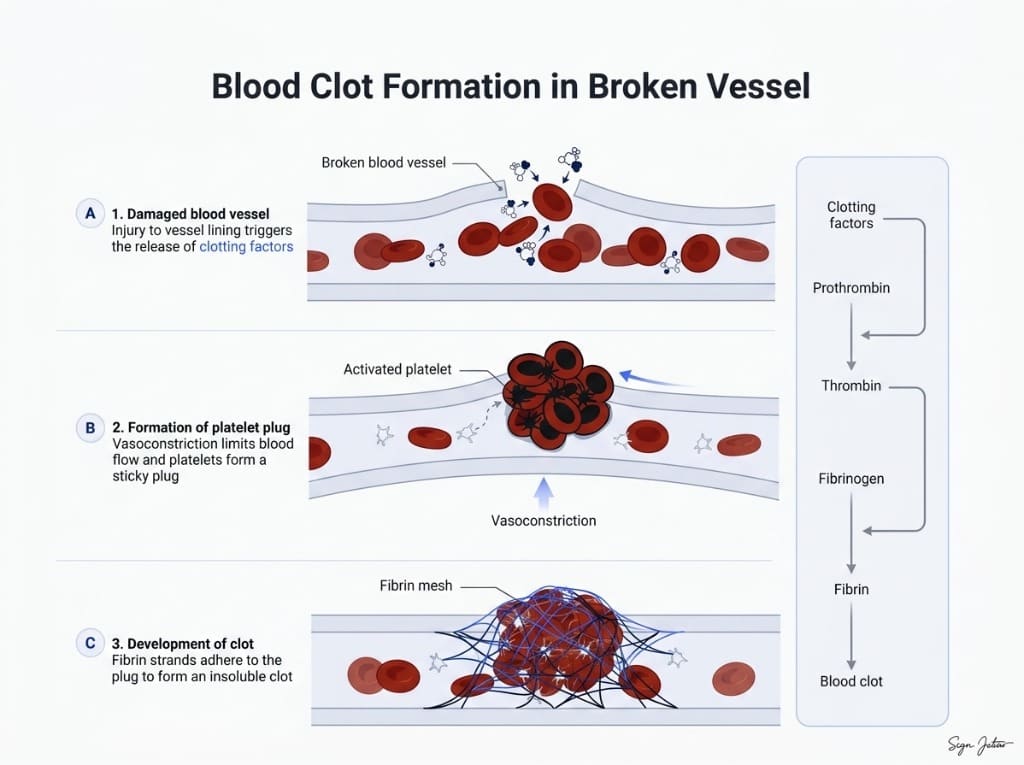
Platelets and fibrin are the two pillars of physiological clotting:
- Platelets form the primary mechanical plug at injury sites.
- Thrombin and fibrinogen generate the secondary fibrin mesh that locks the plug in place.
Triple therapy disables both mechanisms simultaneously. Inhibiting factor Xa while blocking P2Y12 and COX-1 platelet receptors leaves the vascular system virtually defenseless against spontaneous internal bleeding.
In clinical trials for coronary disease, triple therapy is reserved for the highest-risk patients for the shortest possible duration because it triples the incidence of major, life-threatening gastrointestinal and intracranial hemorrhages.
Patients should never attempt to construct DIY anticoagulant protocols by stacking high-dose nattokinase, lumbrokinase, serrapeptase, and aspirin. This compounding effect creates an uncontrolled bleeding hazard without demonstrable safety data.
Evidence-Based Safety Rules for Clot-Busting Supplements
If you and your treating physician decide to investigate proteolytic enzymes, adhere to these five foundational safety rules:
1. Never Combine Enzymes with Prescription Blood Thinners
Do not combine nattokinase, lumbrokinase, or boluoke with prescription anticoagulants (warfarin, Eliquis, Xarelto, Pradaxa) or antiplatelet drugs (Plavix, Brilinta) unless under direct hematological supervision.
2. Discontinue Therapy Prior to Dental or Surgical Procedures
Proteolytic enzymes significantly prolong bleeding times. All fibrinolytic supplements must be discontinued at least 7 to 14 days prior to any planned surgical, dental, or invasive procedure.
3. Start at Low Titrations
Never begin with maximum therapeutic doses. Start at a fractional dose (e.g. 1,000 to 2,000 Fibrin Units of nattokinase) once daily to monitor tolerance, capillary reactivity, and potential allergic or histamine sensitivities.
4. Respect Pacing and Energy Envelopes
A reduction in microvascular clotting does not immediately rebuild damaged cellular mitochondria. If you experience a temporary increase in energy, do not immediately overexert yourself. Follow structured pacing protocols as outlined in our Long COVID survival guide to avoid post-exertional crashes.
5. Verify Objectively Rather Than Guessing
Subjective symptoms are an unreliable guide to microvascular health. Feeling worse does not prove the clots are dissolving, and feeling slightly better does not guarantee your microvasculature is clear.
Instead of guessing whether an enzyme protocol is working, obtain an objective visual baseline. Our nattokinase and lumbrokinase research review explains how research teams monitor microclots under the microscope.
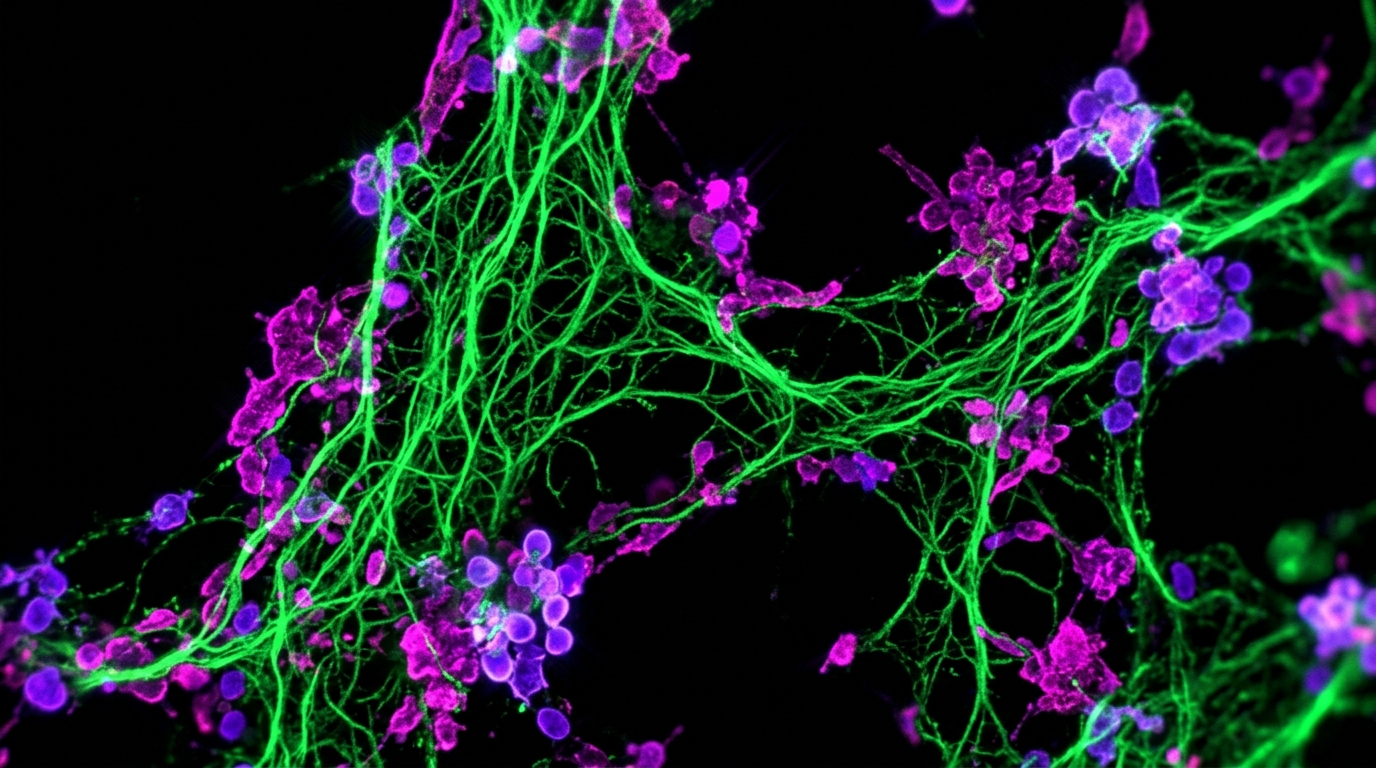
Using an at-home dried blood collection kit, you can obtain 6K RAW video fluorescence microscopy using Thioflavin T staining for $160 USD. Testing before starting a protocol and re-testing several months later provides empirical visual proof to guide your clinical discussions.
Frequently asked questions
Is a nattokinase flare a sign that the enzyme is working?
Not necessarily. While partially dissolving microclots can temporarily release trapped inflammatory cytokines into circulation, feeling dramatically worse or developing headaches, palpitations, or lightheadedness can also signal severe vascular irritation, histamine release, or occult microvascular bleeding. It should never be ignored as a required healing step.
What is the difference between a reperfusion flare and bleeding?
A reperfusion flare typically presents as flu-like fatigue, brain fog, and temporary muscle aching within hours of dosing, without objective physical bleeding signs. Bleeding manifests as physical tissue extravasation: spontaneous ecchymosis (bruising), red or black stools, blood in urine, bleeding gums, or prolonged bleeding from minor scratches.
Can you safely take nattokinase with aspirin or prescription blood thinners?
Taking nattokinase or lumbrokinase alongside aspirin, clopidogrel, apixaban, or rivaroxaban creates a dangerous compound effect on hemostasis. Because enzymes break down fibrin while pharmaceuticals inhibit platelets or thrombin generation, dual therapy significantly multiplies major bleeding and hemorrhagic stroke risks. It should only ever be evaluated under strict medical supervision.
How can I verify whether my microclots are actually clearing?
Instead of relying on ambiguous symptom changes, objective laboratory evaluation provides clarity. An at-home blood test using Thioflavin T fluorescence microscopy visualizes actual fibrin amyloid microclot morphology before and after completing a doctor-supervised protocol.
Sources
- Cardiovascular and haematological pathology in long COVID. Nature Reviews Cardiology, 2024
- Combined triple apixaban, clopidogrel and aspirin therapy in long COVID. Research Square, 2021
- A central role for amyloid fibrin microclots in long COVID/PASC: origins and therapeutic implications. Biochemical Journal, 2022
At-Home Amyloid Test
Track your microvascular progress objectively
Order an at-home blood test kit for $160 USD. Receive 6K RAW video fluorescence microscopy and an objective laboratory report.
Next steps
- Nattokinase for Microclots: What Studies Show About Enzyme TherapyDoes nattokinase dissolve microclots? A plain review of the lab evidence for nattokinase, lumbrokinase and serrapeptase, plus the safety risks.
- Plasmapheresis and DFPP for Long COVID: Results From Japan and GermanyWhat DFPP and plasmapheresis remove, results from Edogawa Hospital in Tokyo, Dresden and Charité, and how they map to amyloid microclot and spike research.
- Microclot Testing Labs and Treatment Centers: How to ChooseCompare microclot testing labs, research programs and apheresis or enzyme treatment options, with the questions to ask before you pay for any of them.

Tim Ottowitz
Founder & Research Lead
Tim Ottowitz founded Amyloid Test and writes its Science Hub, turning fibrin amyloid and spike protein research into plain-language guides that stay close to the published evidence.
Keep reading
Triple Therapy for Long COVID: What It Is and What the Evidence Shows
What triple anticoagulant therapy for long COVID involves, what the only published cohort found, why haematologists object, and the bleeding risks.

Protein Nanoparticles for mRNA Delivery: A Lipid-Free Alternative
How a Harvard team built ENTER, a lipid-free protein nanoparticle that carried mRNA, CRISPR and siRNA in cells and mice, and what the data can't show.
Best at Home Microclot Test Kits in 2026: An Evidence-Based Guide
Compare at-home microclot test kits and clinical testing options. Learn how ThT staining, dried-blood stability, and turnaround times compare.