Living With Long COVID: A Practical Survival Guide for Right Now
Short answer
Living with Long COVID usually means managing uncertainty. The most useful steps right now are pacing to avoid crashes, tracking symptoms so patterns become visible, keeping a one-page medical summary, knowing which red-flag symptoms need urgent care, and being sceptical of anyone selling certainty. Research on mechanisms such as microclots is promising but unfinished, so decisions work best with a clinician.
Key takeaways
- 1Long COVID is a real, multisystem illness, and it probably involves more than one mechanism.
- 2Pacing to avoid post-exertional crashes is one of the few strategies most patients can start today.
- 3A simple symptom log and a one-page medical summary make appointments far more useful.
- 4Red-flag symptoms like chest pain, one-sided weakness or severe breathlessness still need emergency care.
- 5Treat anyone promising a single cause or universal cure with caution, however confident they sound.
If you're living with Long COVID, you probably know the feeling: some tests look normal, symptoms move around, one doctor says stress and another says wait. This guide won't promise a cure. It's here to help you stay oriented, protect your energy, and make better decisions before the science is settled.
Is Long COVID real?
Yes. Research reviews describe Long COVID as a multisystem illness that can follow even mild infection and can last months or years (Davis et al., 2023). It can affect energy, memory, breathing, circulation, heart rate, digestion, sleep and exercise tolerance.
Not every patient looks the same, and not every lab result lights up. That doesn't make the illness imaginary.
Why does Long COVID look so different from person to person?
It's probably not one thing. Researchers are studying several possible mechanisms:
- viral persistence
- immune dysregulation and autoimmunity
- damage to the blood vessel lining (endothelium)
- autonomic dysfunction
- mitochondrial stress
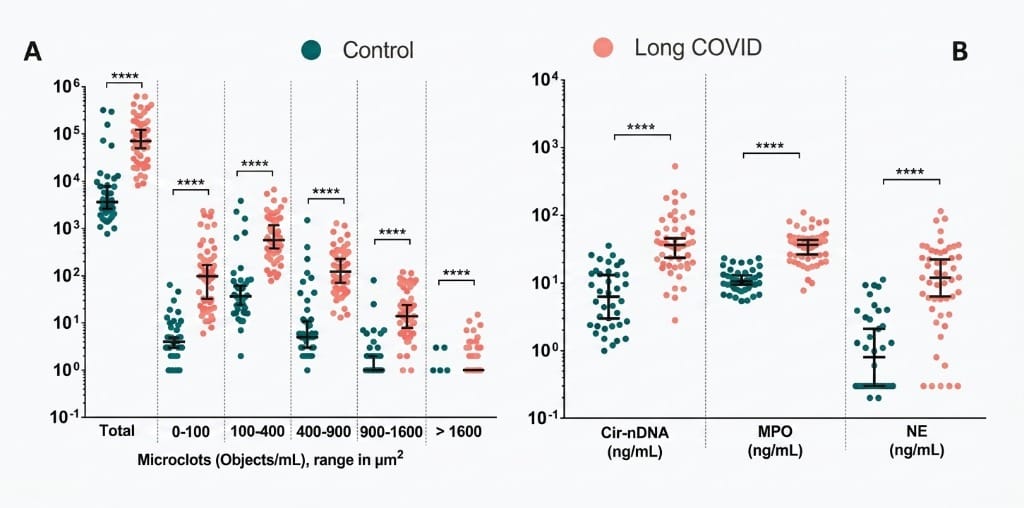
- microvascular problems, including amyloid microclots in Long COVID
That explains why two people can both say "I have Long COVID" and still have very different symptoms and responses. It also means you should be careful with anyone promising one answer for everyone.
What we know fairly well
- Long COVID exists, and it can be disabling.
- Symptoms often worsen after overexertion, sometimes with a delay.
- Standard tests don't always capture the full problem.
- Several biological mechanisms are under active study.
The field isn't empty. It's unfinished.
What looks promising but isn't settled
Fibrin amyloid microclots, spike-related protein misfolding, viral reservoirs, endothelial dysfunction, immune overactivation, and enzyme or anticoagulant strategies are all being studied. Some of the microclot findings come from small observational studies and lab work (Pretorius et al., 2021; Kell et al., 2022).
The right mindset isn't "ignore this" or "treat this as fact." It's: important, plausible, worth tracking, not yet final.
Clinical next step
Need a clearer picture of what may be happening?
Explore screening options and bring better data into the conversation with your clinician.
Start screeningTen things you can do right now
These ten steps don't depend on the science being finished. Most of them cost nothing.
1. Stop asking your body to prove itself every day
Many people get stuck in a loop: feel a bit better, test the limits, crash, lose ground, repeat. That boom-and-bust cycle can become one of the most damaging parts of the illness. If an activity repeatedly causes a crash, it currently costs more than it gives back.
That doesn't mean never move. It means stop spending energy as though you have more than you do.
2. Track patterns, not just feelings
Brain fog makes memory unreliable, so write things down. Keep a simple daily log of:
- sleep quality
- resting heart rate, if you have a way to measure it
- activity level
- symptoms that day
- delayed crashes 12 to 72 hours later
- anything new: supplements, medication, infections, travel, stress
You don't need a perfect spreadsheet. A good log helps you see your own patterns, helps a clinician take you seriously, and protects you from false improvement stories.
3. Learn the shape of your crashes
Post-exertional malaise often arrives a day or more after the trigger. Ask what sets it off, how long the delay is, how long it lasts, and which warning signs show up first.
Early signals people often notice include a wired-but-tired feeling, rising heart rate, temperature swings, head pressure, a sore throat, heavy limbs or a sudden drop in thinking. If you can spot them, you've got a better chance of backing off before the full crash.
4. Protect the basics before chasing the exotic
Before spending serious money, make sure the basics are covered: hydration, regular meals, protected sleep, a symptom log, less boom-and-bust activity, one list of all your medications and supplements, and a clear summary to bring to appointments. They aren't glamorous, but everything else sits on top of them.
5. Build a one-page medical summary
Short appointments go further when your history fits on one sheet. Include:
- when the illness started and any reinfections
- your top five symptoms
- what makes them worse and what helps, even slightly
- major tests already done
- current medications and supplements
- functional losses: work, walking, stairs, reading, driving, sleep
6. Know your red flags
Chronic illness doesn't cancel acute danger. Get urgent or emergency care for:
- crushing chest pain
- severe shortness of breath
- fainting
- one-sided weakness, facial drooping or other signs of stroke
- new confusion
- blue lips or dangerously low oxygen readings
- a painful, swollen leg or other signs of a major blood clot
- severe dehydration or being unable to keep fluids down
7. Treat certainty as something being sold
Be cautious with anyone who says they know the one true cause of every case, that all mainstream care is useless, that every conventional test is meaningless, or that one protocol works for nearly everyone. Real medicine under uncertainty sounds less dramatic: here's what we know, what we suspect, what we can test and what's still unclear.
8. Keep an evidence ladder in your head
Stronger evidence looks like repeated clinical observation, published human data, consistent patterns and improvement seen across different groups. Weaker evidence looks like one dramatic anecdote, theory without patient data, "it worked for my friend," or an expensive protocol backed only by confidence.
Anecdotes aren't worthless. They're a starting point, not a conclusion.
9. Separate investigation from treatment
A test can be useful even when the treatment path is unclear. A treatment can sound logical even when outcome evidence is weak. Try to keep three things apart: what helps you understand the problem, what helps you measure it, and what's being claimed to fix it.
For example, some people choose an at-home amyloid test to see whether microclot material shows up in their sample. That's a measurement, and it's a separate decision from any treatment, such as the enzymes reviewed in nattokinase for microclots.
10. Protect hope from both cynicism and hype
One trap is despair: "Nothing will help, nobody knows anything." The other is surrender: "This person sounds certain, so I'll hand over my money and my judgment." Healthy hope sits in between. The science is incomplete, your suffering is real, and you can still act sensibly.
How can you get more out of doctor appointments?
Not every clinician is up to date on Long COVID. You can still raise the odds of a useful visit by bringing your one-page summary, symptom log, list of tests already done, medication list and a few focused questions:
- "What diagnoses are you trying to rule out?"
- "What do you think the main mechanisms are in my case?"
- "What signs would make you more concerned?"
- "What should I monitor at home?"
- "What changes would justify urgent review?"
If you're confused by normal clotting results, our explainer on D-dimer vs microclot testing can help you frame the conversation. If you've ever been told your normal bloods rule out a physical cause, fibrin amyloid microclots research summarizes what scientists have found so far. If you want a clinician familiar with amyloid-related care, try our doctor directory.
Should you get tested for microclots or spike protein?
That's a personal call, and it's worth making with a clinician. Our free symptom screening tool can help you organize your symptoms first. If you decide to test, the amyloid fibrin test guide explains how microclot microscopy works, and microclot testing labs and treatment centers compares where to get it.
Spike protein is a different question that needs a different assay. Spike protein persistence testing covers what's available and what results can mean.
What if you're bedbound or severely limited?
When the illness is severe, your main job may be protection rather than optimization:
- reduce sensory load and unnecessary exertion
- simplify decisions
- make hydration and nutrition easier
- ask for help earlier, not later
- keep records, because memory and stamina may be poor
When someone's severely ill, "try harder" isn't serious advice.
Explaining Long COVID to a child
"Some people get sick from COVID and their body doesn't go back to normal. Doctors and scientists are still working out exactly why, and it might be more than one problem. The safest thing is to notice patterns, not push too hard, write down what makes you worse, get help fast for danger signs, and be careful of people who sound more certain than the science really is."
The mindset that helps most
If this guide had to fit on a sticky note, it would say: be calm, be observant, be hard to fool. Not passive, not frantic, and not hypnotized by certainty.
You need a clearer map, better notes, more respect for your limits, faster recognition of danger and less exposure to people selling certainty. The science will keep moving. In the meantime, look for the next honest, useful step.
Frequently asked questions
How long does Long COVID last?
It varies a lot. Some people improve over months, while others remain unwell for years. Research reviews describe a wide range of recovery patterns, and there's no reliable way yet to predict any one person's course. Tracking your symptoms over time is the best way to see whether you're improving, plateauing or worsening, and it gives your clinician something concrete to work with.
What is pacing for Long COVID?
Pacing means planning activity so you stay inside your current energy limits and avoid the delayed crashes known as post-exertional malaise. In practice that often means breaking tasks into smaller pieces, resting before you feel exhausted, and not using a good day to catch up on everything. Many people find a heart rate monitor or symptom log helps them spot their limits.
Should I exercise with Long COVID?
If exertion reliably makes you worse a day or two later, pushing through with graded exercise can backfire. Many Long COVID clinicians now advise pacing first and only increasing activity slowly when symptoms are stable. Gentle movement that doesn't trigger crashes is usually fine. Talk to a clinician who knows post-exertional malaise before starting a structured exercise program.
What tests should I ask for with Long COVID?
That depends on your symptoms, so start by asking your doctor which conditions they want to rule out. Common checks include blood counts, thyroid, iron, inflammation markers and heart tests. Some patients also choose research-based tests such as microclot microscopy. Bring a symptom log and a list of tests already done so nothing gets repeated or missed.
Sources
- Long COVID: major findings, mechanisms and recommendations. Nature Reviews Microbiology, 2023
- A central role for amyloid fibrin microclots in long COVID/PASC: origins and therapeutic implications. Biochemical Journal, 2022
- Persistent clotting protein pathology in Long COVID/Post-Acute Sequelae of COVID-19 (PASC) is accompanied by increased levels of antiplasmin. Cardiovascular Diabetology, 2021
At-Home Amyloid Test
Need a clearer picture of what may be happening?
Explore screening options and bring better data into the conversation with your clinician.
Next steps
- Microclots and Long COVID: A Plain-Language Guide to Amyloid ClotsMicroclots and Long COVID explained simply: what amyloid fibrin microclots are, how spike protein may be involved, what's proven and what's still open.
- Nattokinase for Microclots: What Studies Show About Enzyme TherapyDoes nattokinase dissolve microclots? A plain review of the lab evidence for nattokinase, lumbrokinase and serrapeptase, plus the safety risks.
- Microclot Testing Labs and Treatment Centers: How to ChooseCompare microclot testing labs, research programs and apheresis or enzyme treatment options, with the questions to ask before you pay for any of them.

Tim Ottowitz
CTO, Amyloid Test
Tim Ottowitz leads product and technical systems at Amyloid Test, translating research into clear patient-facing screening workflows and educational resources.
Keep reading
What Are Microclots? A Plain-Language Guide to Amyloid Microclots
What microclots are, how fibrin folds into amyloid microclots that resist breakdown, the symptoms researchers link to them, and how they're tested.
D-Dimer vs Microclot Test: Why a Normal D-Dimer Can Miss Microclots
D-dimer vs microclot test compared: what each measures, why D-dimer can read normal in Long COVID, and how Thioflavin T microscopy finds fibrin amyloid.
DNase and NET Clearance in Long COVID: Why Microclots May Persist
COVID-19 can lower DNase, the enzymes that clear NETs. What the DNase research means for lingering microclots in Long COVID, and what's still unproven.