Amyloid-Beta Antimicrobial Peptide: Amyloid as an Immune Defense
Short answer
Yes, there's good lab evidence that amyloid-beta acts as an antimicrobial peptide. It kills or traps microbes in test tubes and protected mice and worms from infection in a 2016 study. This "antimicrobial protection hypothesis" reframes Alzheimer's amyloid as an immune response that can overshoot, though it hasn't been proven as the main cause of Alzheimer's in people.
Key takeaways
- 1Amyloid fibers share a cross-beta "steric zipper" backbone that makes them extremely stable and hard to break down once formed.
- 2Bacteria build biofilms from functional amyloids with the same cross-beta architecture found in human disease amyloids.
- 3Amyloid-beta kills microbes in lab tests and protected mouse and worm models from infection, supporting the antimicrobial protection hypothesis.
- 4SARS-CoV-2 spike protein contains amyloid-prone segments, and three spike peptides met full amyloid criteria in a 2022 lab study.
- 5Whether spike engages the amyloid immune pathway in people hasn't been tested directly.
For decades, Alzheimer's research treated amyloid-beta as a waste product that piles up when the brain's cleanup fails. Structural biology and immunology now suggest something different: amyloid-beta may be an old immune weapon that sometimes overshoots. This guide explains the evidence, drawing on Israeli structural biologist Meytal Landau's work at the Technion, and asks what it could mean for SARS-CoV-2 spike protein.
The analysis follows Meytal Landau's lecture on functional amyloid fibrils, hosted by the Israel Institute for Advanced Studies, plus the papers behind it.
Why are amyloid fibers so stable?
Amyloids are protein fibers. They form when proteins, whether naturally floppy or normally folded, partly misfold and self-assemble into oligomers and then long, insoluble fibrils. Much of the protein can stay disordered, but the ordered backbone is what counts, and it's remarkably stable. In her lecture, Landau describes amyloid fibers surviving boiling in SDS detergent, a treatment that unfolds most ordinary proteins.
The backbone structure was solved by David Eisenberg's lab at UCLA and is called a steric zipper (Sawaya et al., Nature, 2007). Two beta-sheets mate, and their side chains interlock like zipper teeth, layer after layer. Each strand runs perpendicular to the fiber axis, hence the name cross-beta.
This same cross-beta structure is what dyes such as Thioflavin T and Congo red recognize, which is how labs detect fibrils. Our amyloid fibril test guide explains those methods.
Prion diseases show how tough these fibers are. During the UK "mad cow" outbreak, some people who ate contaminated beef developed variant Creutzfeldt-Jakob disease. No virus or bacterium was involved: misfolded prion protein survived digestion and eventually seeded new deposits in the brain.
Do bacteria make amyloid too?
Yes. E. coli and Salmonella secrete amyloid fibers called curli. They aren't accidents: they form the scaffold of biofilms, the tough matrices bacteria build to resist antibiotics, solvents and the immune system.
Biofilms are why infected implants often have to be removed surgically and why some skin infections shrug off antibiotics. And the curli fibers in them share the cross-beta structure of the amyloid-beta found in Alzheimer's disease.
Landau's lab solved the structures of curli segments and found canonical steric zippers, the same architecture seen in human disease amyloids (Salinas et al., PLOS Pathogens, 2019). Then came a telling experiment. Working with Dieter Willbold's group in Germany, they tested D-amino acid peptides that had been designed against human amyloid-beta for Alzheimer's.
Those Alzheimer's-targeting compounds reduced Salmonella biofilm formation. A drug built for the human brain hit a bacterial wall because the structural target was the same.
Is amyloid-beta an antimicrobial peptide?
The evidence says it can act like one. Robert Moir, Rudolph Tanzi and colleagues at Harvard showed that amyloid-beta kills a range of microbes in lab tests (Soscia et al., PLoS ONE, 2010).
In 2016 they went further: amyloid-beta protected mice and worms against infection, and its fibrils trapped microbes (Kumar et al., Science Translational Medicine). That work became the antimicrobial protection hypothesis of Alzheimer's (Moir et al., Alzheimer's & Dementia, 2018).
In this model, the brain makes amyloid-beta when it senses a microbial threat, and the fibrils trap invaders. Later, perhaps because we live longer than the system evolved for, or because something tips the balance, those protective fibers accumulate and become harmful. Landau discusses the same idea in her lecture.
This reframes amyloid-beta as a defense mechanism rather than pure garbage. It works through self-assembly into cross-beta fibers, the same trick bacteria use and prions exploit.
How do pathogens use amyloid as a weapon?
Landau's lab found that Staphylococcus aureus, a major antibiotic-resistant pathogen, secretes peptides called phenol-soluble modulins (PSMs) that use amyloid structures for several jobs. Some form the classic cross-beta zipper for biofilms. Others form a new architecture she named cross-alpha, stacked alpha-helices instead of beta-strands, linked to killing human immune cells (Tayeb-Fligelman et al., Science, 2017).
Still other PSMs form different assemblies with antibacterial activity against competing microbes (Salinas et al., Nature Communications, 2018). Her team also found PSMα3 fibrils can shift between forms depending on conditions (Tayeb-Fligelman et al., Structure, 2020).
A frog antimicrobial peptide, uperin 3.5, turned out to switch between cross-alpha and cross-beta forms as well (Salinas et al., PNAS, 2021). The pattern is clear: amyloid self-assembly is a general-purpose biological tool, used across life for defense, attack and building.
The amyloid fold as a cross-species template
When Alzheimer's-targeting compounds blocked bacterial biofilm amyloid, it showed the amyloid fold is shared across kingdoms of life. The same architecture appears in humans, bacteria and fungi, and the same molecules can hit it across species.
So any protein that can adopt or nucleate the amyloid fold is interacting with one of biology's most deeply conserved structural motifs. That's the background for asking how viral proteins behave around it.
Where does spike protein fit in?
Spike protein isn't a passive "mugshot." It's a functional protein that binds ACE2, and both infection and mRNA vaccination expose the body to it (the vaccines encode a stabilized full-length spike).
Studies have found spike in the body beyond the injection site in some people. Free spike protein was detected in the blood of adolescents and young adults with post-vaccine myocarditis but not in matched vaccinated controls (Yonker et al., Circulation, 2023). Vaccine mRNA has been detected in some tissue samples in the weeks after vaccination (Krauson et al., npj Vaccines, 2023), and in mice the S1 subunit crossed the blood-brain barrier (Rhea et al., Nature Neuroscience, 2021). Our guide to spike protein persistence testing explains how spike is actually measured.
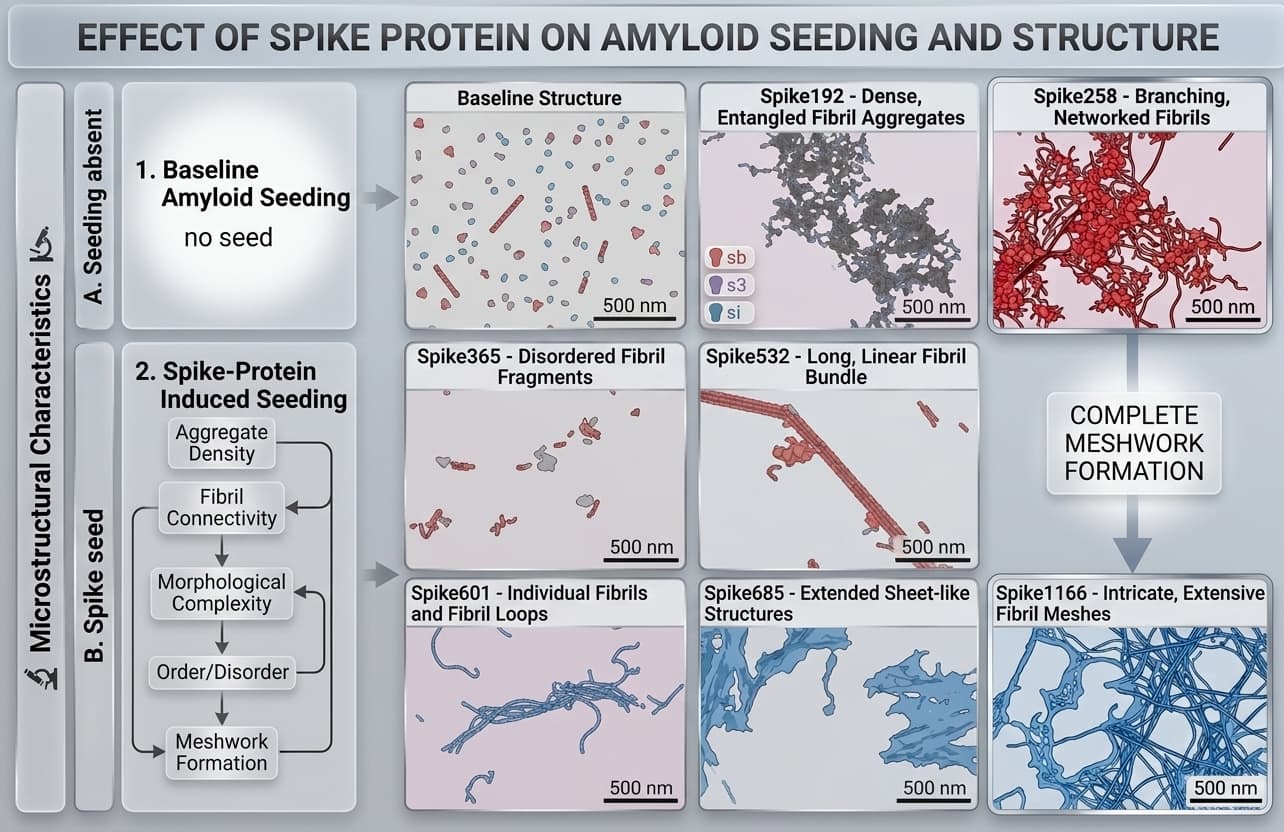
Spike also has amyloid-prone regions. Linköping researchers found seven amyloid-prone sequences in spike, three of which met full amyloid criteria, and showed neutrophil elastase can cut spike into amyloid-forming pieces (Nyström & Hammarström, JACS, 2022). We explain that in how neutrophil elastase turns spike protein into amyloid. Another team mapped amyloid-prone proteins across the whole SARS-CoV-2 proteome (Charnley et al., Nature Communications, 2023).
Clinical next step
Curious what amyloid looks like in your own blood?
See how our at-home amyloid fibrin test works, and review the report with a qualified clinician.
Start screeningThe open question
Landau's work and the wider amyloid field raise a direct question: what happens when a circulating, biologically active, amyloid-prone protein meets an immune pathway that responds to threats by building amyloid fibers?
One possibility is a chain: the body senses a foreign protein, deploys its amyloid-based response, and the foreign protein itself seeds or speeds up aggregation. There's early lab support for the last step. A 2023 preprint found spike amyloid sped up amyloid-beta and prion protein misfolding in test tubes, covered in spike protein and Alzheimer's cross-seeding. A 2026 review extends the idea to tau, which we assess in is spike protein a prion?
None of this has been shown in a living person. And once fibers form, they're hard to clear. As Landau put it in her lecture, "You cannot kill amyloids after they are formed."
Amyloid beyond the brain: clots and immune webs
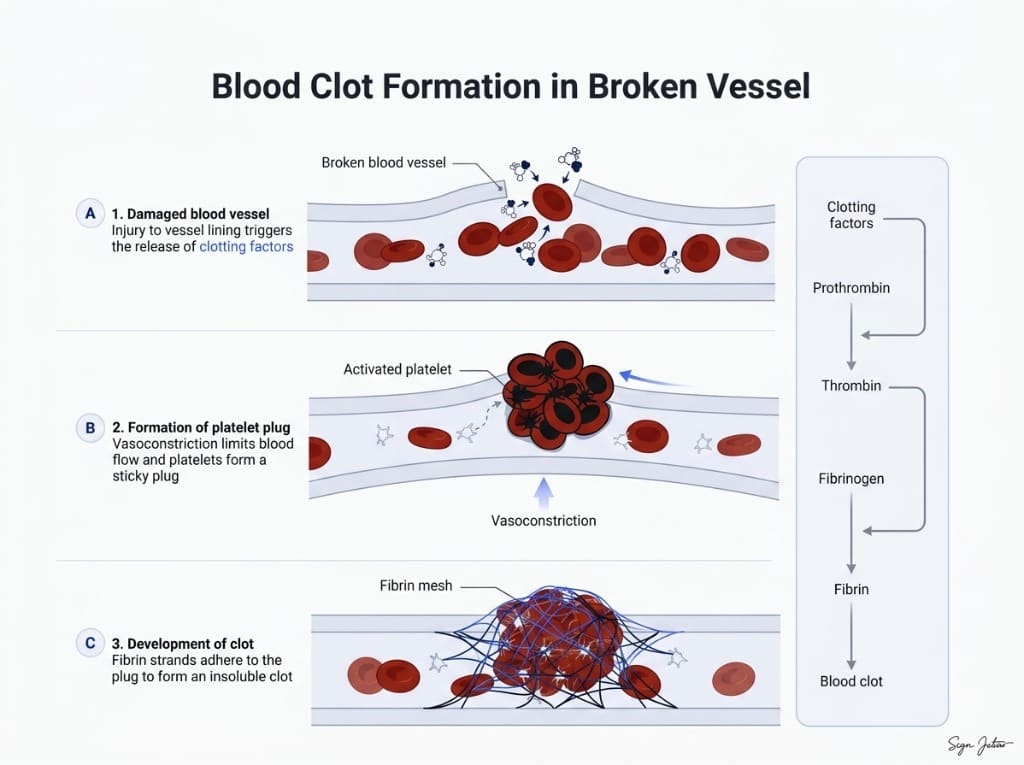
Amyloid isn't limited to the brain. Fibrin, the protein that forms blood clots, can also fold into an amyloid form that resists breakdown, as described in the fibrin amyloid microclots research. Researchers have also found neutrophil extracellular traps, another immune defense, tangled into microclots in Long COVID, which we cover in microclots and NETs in Long COVID.
The common thread is that immune defenses built for short-term containment may leave behind stable, hard-to-clear material when they run too long.
What was known before the pandemic?
The steric zipper structure was solved more than a decade before COVID-19, and hundreds of such structures from disease-related proteins had been published. The antimicrobial hypothesis for amyloid-beta had experimental support from 2010 onward. The structural overlap between bacterial functional amyloids and human disease amyloids was shown in 2019, and the cross-alpha fold in 2017.
We haven't found public safety documents that specifically assessed whether spike protein might engage these amyloid pathways. Whether it does in people remains an open research question, not a settled finding.
Can you test for amyloid after COVID-19 or vaccination?
It depends on which amyloid you mean. Alzheimer's-related amyloid-beta is measured with PET scans, spinal fluid or plasma amyloid-beta 42/40 and p-tau blood tests. Our guide to the types of amyloid tests compares them.
Our at-home amyloid test looks at something else: fibrin amyloid microclots in a dried blood sample, stained with Thioflavin T and recorded with fluorescence video microscopy. It doesn't measure amyloid-beta, detect brain plaques or measure spike protein, and it isn't a diagnosis. The report is observational lab data you can share with a qualified clinician.
The takeaway
Landau's work shows how amyloid fibers are built, how bacteria use them for biofilms, how pathogens use them to kill immune cells, and why Alzheimer's-targeting compounds can hit bacterial amyloid. Moir and colleagues' work shows amyloid-beta may be a weapon, not waste.
Spike protein has amyloid-prone regions and can form fibrils in the lab. Whether it engages the amyloid immune pathway in people is still untested, and that's the question worth funding.
This article is educational. It discusses preclinical research and doesn't diagnose illness or replace care from a qualified clinician.
Frequently asked questions
What is the antimicrobial protection hypothesis of Alzheimer's?
It's the idea, developed by Robert Moir, Rudolph Tanzi and colleagues, that amyloid-beta is part of the brain's innate immune system. In this view, amyloid-beta forms fibrils to trap and neutralize microbes, and Alzheimer's plaques may partly reflect that defense running for too long or too hard. It's supported by lab and animal studies but isn't proven as the cause of Alzheimer's.
What is a functional amyloid?
A functional amyloid is an amyloid fiber that an organism makes on purpose to do a job, rather than as a folding mistake. Examples include curli fibers that E. coli and Salmonella use to build biofilms, and staphylococcal PSM peptides that form fibrils with toxic or antibacterial roles. They share the cross-beta structure seen in disease amyloids.
Why are amyloid fibers so hard to break down?
Their backbone is a cross-beta steric zipper: pairs of beta-sheets whose side chains interlock like zipper teeth, repeated thousands of times along the fiber. That packing resists heat, detergents and protein-cutting enzymes. Meytal Landau summed it up in a lecture by saying you can't kill amyloids after they're formed.
Does spike protein trigger amyloid-beta production?
That hasn't been shown in people. What's known is that spike protein contains amyloid-prone segments that form fibrils in the lab, and spike amyloid sped up amyloid-beta misfolding in a 2023 test-tube preprint. Whether spike engages the brain's amyloid-beta immune response in a living person is an open research question.
Sources
- Meytal Landau: Functional Amyloid Fibrils (lecture). Israel Institute for Advanced Studies
- Atomic structures of amyloid cross-β spines reveal varied steric zippers. Nature, 2007
- The cytotoxic Staphylococcus aureus PSMα3 reveals a cross-α amyloid-like fibril. Science, 2017
- Extreme amyloid polymorphism in Staphylococcus aureus virulent PSMα peptides. Nature Communications, 2018
- Structural Insights into Curli CsgA Cross-β Fibril Architecture Inspire Repurposing of Anti-amyloid Compounds as Anti-biofilm Agents. PLOS Pathogens, 2019
- Staphylococcus aureus PSMα3 Cross-α Fibril Polymorphism and Determinants of Cytotoxicity. Structure, 2020
- The amphibian antimicrobial peptide uperin 3.5 is a cross-α/cross-β chameleon functional amyloid. PNAS, 2021
- The Alzheimer's Disease-Associated Amyloid β-Protein Is an Antimicrobial Peptide. PLoS ONE, 2010
- Amyloid-β peptide protects against microbial infection in mouse and worm models of Alzheimer's disease. Science Translational Medicine, 2016
- The antimicrobial protection hypothesis of Alzheimer's disease. Alzheimer's & Dementia, 2018
- Amyloidogenesis of SARS-CoV-2 Spike Protein. Journal of the American Chemical Society, 2022
- Amyloidogenic proteins in the SARS-CoV and SARS-CoV-2 proteomes. Nature Communications, 2023
- Circulating Spike Protein Detected in Post-COVID-19 mRNA Vaccine Myocarditis. Circulation, 2023
- Duration of SARS-CoV-2 mRNA vaccine persistence and factors associated with cardiac involvement in recently vaccinated patients. npj Vaccines, 2023
- The S1 protein of SARS-CoV-2 crosses the blood-brain barrier in mice. Nature Neuroscience, 2021
At-Home Amyloid Test
Curious what amyloid looks like in your own blood?
See how our at-home amyloid fibrin test works, and review the report with a qualified clinician.
Next steps
- Neutrophil Extracellular Traps in Long COVID: The Microclot-NET StudyA 2025 study found neutrophil extracellular traps tangled into microclots in Long COVID. What the paper measured, what it found, and what it can't prove.
- Spike Protein and Alzheimer's: The Spike Amyloid Cross-Seeding StudySpike protein amyloid sped up misfolding of Alzheimer's amyloid-beta and prion protein in a lab study. What it shows about the brain, and what it doesn't.
- Types of Amyloid Tests: Blood Tests, PET, CSF, Biopsy and MicroclotsCompare the types of amyloid tests: Alzheimer's blood tests, amyloid PET, spinal fluid, amyloidosis biopsy and fibrin amyloid microclot microscopy.

Tim Ottowitz
Founder, CovidVaccineDetox
Tim Ottowitz leads research and content at CovidVaccineDetox, translating structural biology and immunology findings into accessible patient-facing resources.
Keep reading
DNase and NET Clearance in Long COVID: Why Microclots May Persist
COVID-19 can lower DNase, the enzymes that clear NETs. What the DNase research means for lingering microclots in Long COVID, and what's still unproven.
Is Spike Protein a Prion? What a 2026 Prion-Like Domain Review Shows
Is spike protein a prion? A 2026 review links spike prion-like domains to amyloid-beta and tau cross-seeding. Here's what's proven and what isn't yet.
COVID Vaccine Harms: What the 2025 JPandS Review Argues
A plain-language walkthrough of the 2025 JPandS review on COVID vaccine harms: what it claims, which sources hold up, and where the evidence is weak.