Triple Therapy for Long COVID: What It Is and What the Evidence Shows
Short answer
Triple therapy for long COVID usually means two antiplatelet drugs (clopidogrel and aspirin) plus an anticoagulant (apixaban), aimed at fibrin amyloid microclots. The only published data are an uncontrolled South African cohort of 91 patients in which most reported symptom improvement. There are no randomized trials, the combination carries real bleeding risk, and haematologists have argued it shouldn't be used outside trials.
Key takeaways
- 1Triple therapy combines clopidogrel, aspirin and apixaban, usually with a stomach-protecting proton pump inhibitor.
- 2The main evidence is a 2023 preprint of 91 patients treated without a control group, so improvement can't be attributed to the drugs.
- 3Combining two antiplatelets with an anticoagulant raises the risk of serious bleeding, including in the gut and brain.
- 4Haematologists led by Beverley Hunt concluded in 2024 that unlicensed antithrombotic use for long COVID isn't justified outside trials.
- 5Never start, stop or combine blood thinners without a doctor who knows your full history.
"Triple therapy" comes up constantly in Long COVID communities, usually as a question: what is it, who prescribes it, and is the bleeding risk worth it? This guide explains the regimen, the one published dataset behind it, the strongest criticism, and the safety questions to settle with a doctor before anything else.
What is triple therapy for long COVID?
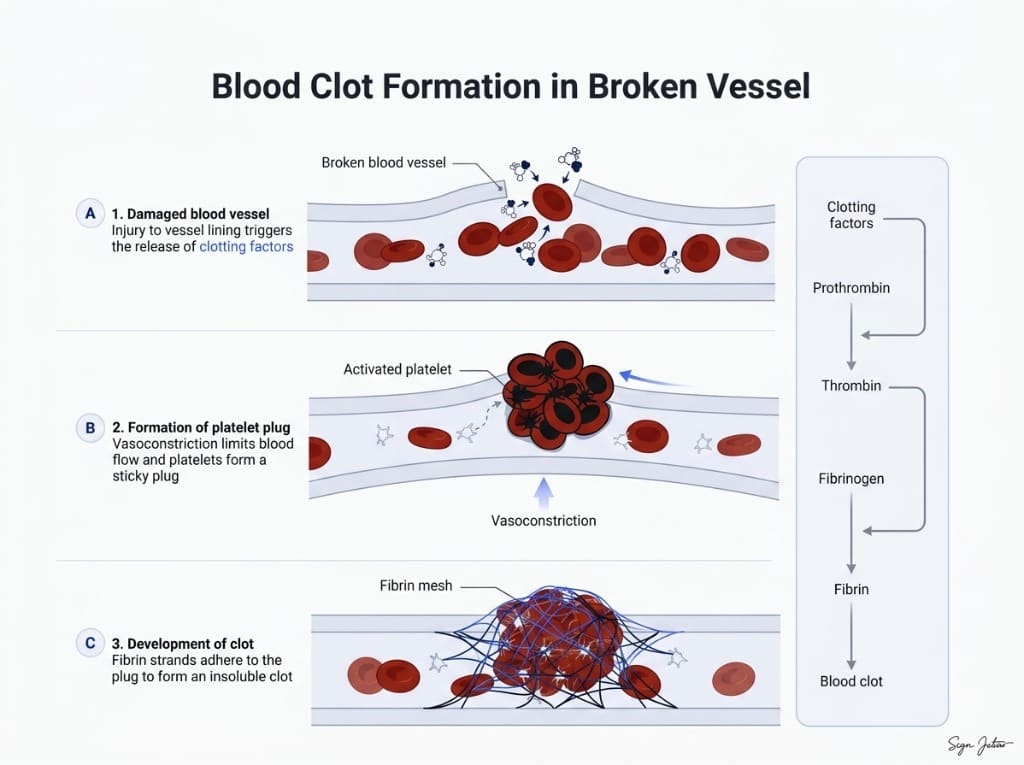
It's a combination of three drugs that act on clotting in different ways, aimed at the fibrin amyloid microclots described by Resia Pretorius, Douglas Kell and colleagues. In the published cohort, patients took:
| Drug | Class | What it does |
|---|---|---|
| Clopidogrel | Antiplatelet (P2Y12 inhibitor) | Stops platelets from clumping |
| Aspirin | Antiplatelet (COX inhibitor) | Reduces platelet activation |
| Apixaban | Anticoagulant (factor Xa inhibitor) | Slows formation of fibrin, the clot mesh |
| Proton pump inhibitor | Stomach protection | Lowers the risk of gut bleeding |
The idea comes from a 2022 review in the Biochemical Journal. It argued that fibrinolysis-resistant microclots and hyperactivated platelets reduce blood flow in small vessels, so dampening both clotting pathways might help. If you're new to the concept, start with what microclots are.
What did the triple therapy study find?
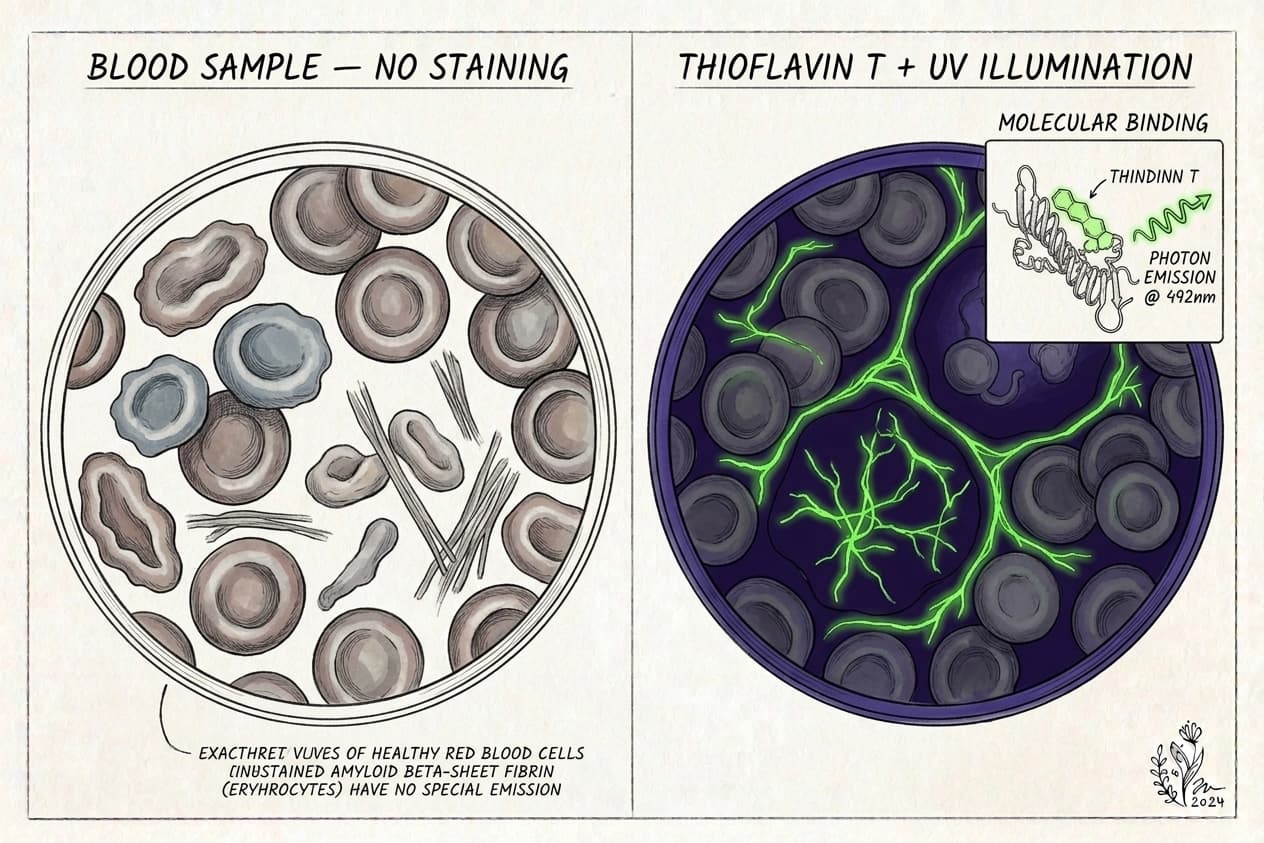
The only dataset is a 2023 preprint from South Africa. Clinicians treated 91 Long COVID patients with the regimen above and compared symptoms and blood samples before and after. Most patients reported that symptoms such as fatigue and brain fog improved, and microclot and platelet scores on Thioflavin T microscopy fell.
That sounds encouraging, but the design can't answer whether the drugs worked:
- No control group. Long COVID symptoms often fluctuate and improve with time, so improvement after any treatment is expected in some people.
- No blinding. Patients and clinicians knew the treatment, which affects how symptoms are reported.
- Not peer reviewed as a preprint, and from the same research network that proposed the hypothesis.
- Selected patients. Treatment was started by clinicians after microclot findings, not randomly assigned.
Why do haematologists object?
In 2024 a group led by haematologist Beverley Hunt published a critique of the microclot hypothesis. They concluded the evidence didn't support thrombosis as the driver of long COVID, and that using unlicensed antithrombotic combinations outside clinical trials wasn't justified given the bleeding risk. Kell, Khan and Pretorius replied that the critique misread their data.
Science journalism has reflected the same split. Undark's reporting describes patients paying for triple therapy while researchers on both sides call for proper trials. Our summary of amyloid microclots research covers the wider debate.
Next step
Want data before you talk to a doctor about microclots?
Our at-home amyloid fibrin test records Thioflavin T microscopy of your sample. It's observational data for your clinician, not a reason to start blood thinners.
See the at-home testWhat are the risks of triple therapy?
Bleeding is the main one, and it isn't theoretical. Each drug raises bleeding risk on its own, and combining an anticoagulant with two antiplatelets is normally reserved for specific heart conditions, for short periods, under close monitoring. Risks include:
- easy bruising, nosebleeds and heavy periods;
- bleeding from the stomach or bowel, which can be serious;
- rarely, bleeding in the brain.
Risk rises with age, kidney problems, stomach ulcers, low platelets and other medicines or supplements. That includes enzymes like nattokinase and lumbrokinase, covered in our nattokinase for microclots review.
Seek urgent care for black or bloody stools, vomiting blood, a sudden severe headache, or bleeding that won't stop.
Questions to ask before considering it
If a clinic suggests triple therapy, these questions protect you:
- What's the evidence, and what will we measure? Agree on symptoms or tests to track before starting, so you know whether it's working.
- How was my bleeding risk assessed? Kidney function, blood count, stomach history and every medicine and supplement should be reviewed.
- How long, and how do we stop? Open-ended treatment without review is a red flag.
- Who do I call if I bleed? You need a clear plan and access to the prescriber.
- Is there a trial I could join instead? A trial adds monitoring and helps answer the question for everyone.
Should you get a microclot test first?
Some clinics use microclot imaging to decide who to treat. A test can add information, but there's no validated cutoff that says "treat," and a result shouldn't be the sole basis for starting blood thinners. Our guide on how to test for microclots explains what each method shows. If your routine labs are normal, does long COVID show up on blood tests explains why that's common.
Where to go next
For the other treatment that comes up most, read our guide to plasmapheresis for long COVID. If you're still deciding whether microclots are part of your picture, the amyloid fibrin test guide explains what microscopy can and can't tell you.
Frequently asked questions
What drugs are in triple therapy for long COVID?
In the published South African cohort, the regimen combined clopidogrel and aspirin, which both reduce platelet activity, with apixaban, an anticoagulant that blocks clotting factor Xa. Patients also took a proton pump inhibitor to protect the stomach. Doses and duration were set by the treating clinicians and varied, and other clinics use different combinations.
Does triple therapy work for long COVID?
Nobody knows yet. The 2023 cohort reported that most of 91 patients felt better after treatment, but there was no control group, no blinding and the work was a preprint. Long COVID symptoms often fluctuate and improve over time, so uncontrolled results can't show the drugs caused the change. Randomized trials are needed.
What are the risks of triple therapy?
Bleeding. Each drug on its own raises bleeding risk, and combining an anticoagulant with two antiplatelets raises it further. Bleeding can be minor, like easy bruising or nosebleeds, or serious, such as stomach bleeding or bleeding in the brain. Risk depends on age, kidney function, other medicines and supplements, so it needs individual medical supervision.
Can I take nattokinase with triple therapy?
Don't combine them without your doctor's explicit approval. Nattokinase is a fibrinolytic enzyme that may add to the bleeding effect of anticoagulants and antiplatelets. Many supplements, including fish oil, turmeric and ginkgo, can also affect bleeding. Tell whoever prescribes your treatment about everything you take.
Who prescribes triple therapy for long COVID?
A small number of private Long COVID and integrative clinics, mostly following the Pretorius and Kell microclot model, prescribe it off-label, often after microclot imaging. It isn't part of national guidelines in the US, UK or South Africa, so most GPs and hospital doctors won't offer it. Any prescriber should assess your bleeding risk and plan monitoring before starting.
Sources
- Treatment of Long COVID symptoms with triple anticoagulant therapy (preprint). Research Square, 2023
- A central role for amyloid fibrin microclots in long COVID/PASC: origins and therapeutic implications. Biochemical Journal, 2022
- Challenging the current hypothesis that thrombosis is responsible for the post-COVID-19 condition. Research and Practice in Thrombosis and Haemostasis, 2024
- Fibrinaloid microclots in long COVID: assessing the actual evidence properly. Research and Practice in Thrombosis and Haemostasis, 2024
- Bad blood? The uncertainty around microclots and Long COVID. Gavi VaccinesWork (Undark), 2024
- Long COVID Clinical Guidance. U.S. Centers for Disease Control and Prevention, 2026
At-Home Amyloid Test
Want data before you talk to a doctor about microclots?
Our at-home amyloid fibrin test records Thioflavin T microscopy of your sample. It's observational data for your clinician, not a reason to start blood thinners.
Next steps
- Nattokinase for Microclots: What Studies Show About Enzyme TherapyDoes nattokinase dissolve microclots? A plain review of the lab evidence for nattokinase, lumbrokinase and serrapeptase, plus the safety risks.
- Plasmapheresis and DFPP for Long COVID: Results From Japan and GermanyWhat DFPP and plasmapheresis remove, the results from Edogawa Hospital in Tokyo, Dresden and Charité, and how they map to amyloid microclot and spike research.
- Microclot Testing Labs and Treatment Centers: How to ChooseCompare microclot testing labs, research programs and apheresis or enzyme treatment options, with the questions to ask before you pay for any of them.

Tim Ottowitz
Founder & Research Lead
Tim Ottowitz founded Amyloid Test and writes its Science Hub, turning fibrin amyloid and spike protein research into plain-language guides that stay close to the published evidence.
Keep reading

Protein Nanoparticles for mRNA Delivery: A Lipid-Free Alternative
How a Harvard team built ENTER, a lipid-free protein nanoparticle that carried mRNA, CRISPR and siRNA in cells and mice, and what the data can't show.
Does Long COVID Show Up on Blood Tests? What Normal Results Miss
Why routine blood tests look normal in long COVID: amyloid fibrin microclots resist breakdown, spike forms amyloid fibrils, and panels miss both.
What Are Microclots? A Plain-Language Guide to Amyloid Microclots
What microclots are, how fibrin folds into amyloid microclots that resist breakdown, the symptoms researchers link to them, and how they're tested.